



Printable Download
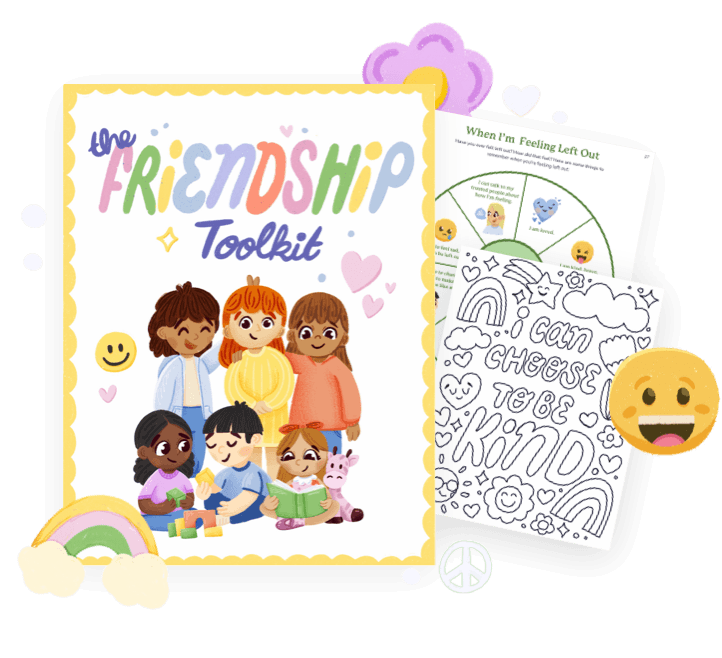
The Friendship Toolkit
Help your child make friends, work through the rough patches, and stand up for themselves. It's a printable set of worksheets, activities, stories, and games you and your child go through together, so friendship is something you can practice side by side, not something they figure out alone.
Ages 3 to 9
45-page printable
Do it together


When friendship gets hard
Preparing your child for friendship struggles before they happen.
Your child wants a friend, but freezes when it is time to join in.
They hang back at the edge of the group, or come home saying nobody played with them. You want to give them the words to introduce themselves and find their way in, without pushing them to be someone they are not.
A friend is being unkind, and it is landing harder than you thought it would.
Someone left them out, said something cruel, or keeps changing the rules of the friendship. You want your child to recognize when a friend is not being kind or safe, and to know their voice is allowed to get loud.
You want your child to build the kind of friendships that last.
Not just any friends, but genuine ones: kids who are kind back, who they can disagree with and stay close to. You want them to know what a real friend looks like, and how to be one.
What Comes in The Friendship Toolkit

45 printable pages to print and work through together
Stories your child reads with you, so the big friendship ideas land in a way they remember
Games that make practicing friendship feel more like play than a lesson
Hands-on worksheets, plus activities and coloring sheets, for the kids who learn by doing
Practical tools and strategies for the friendship moments that come up most
Parent tips from Jess and the expert team
US$23.44
Buy once and print it as often as you like for your own household today.
What Your Child Will Learn
Making Friends and Joining In
A Strong Voice and Steady Confidence
Knowing a Good Friend From an Unsafe One

Created with care
Created by Jess and a team who know how much friendship matters.
The Friendship Toolkit was created by Jess VanderWier, a Registered Psychotherapist and mom of three, with a team of experts in child development. We know that the friendships of the early years shape how a child sees themselves for years to come, and we know how much the hard parts can hurt.
The goal is to help your child understand what friendship really means, feel safe and valued by the friends they choose, and find their voice when a friendship does not feel right. This is a practical tool for guiding those conversations, not therapy or a replacement for professional support.
What's inside
A Look Inside the Toolkit
A small preview of the real pages, so you can see how clear and child-friendly they are before you buy.
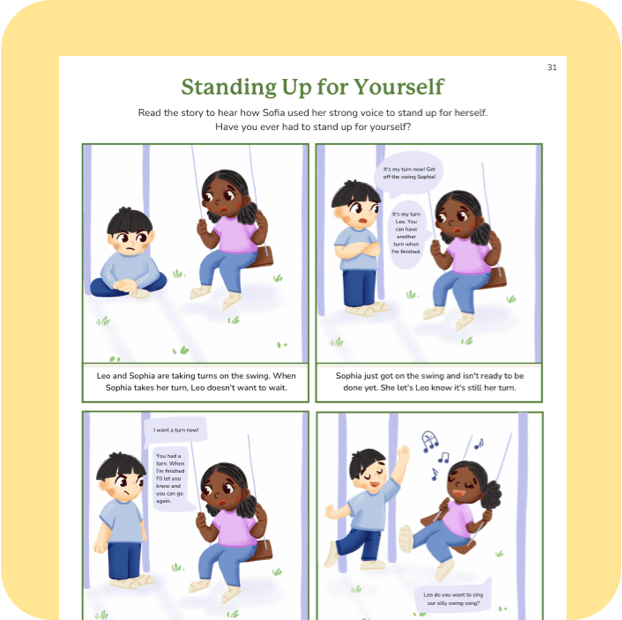
Story
Standing Up For Yourself
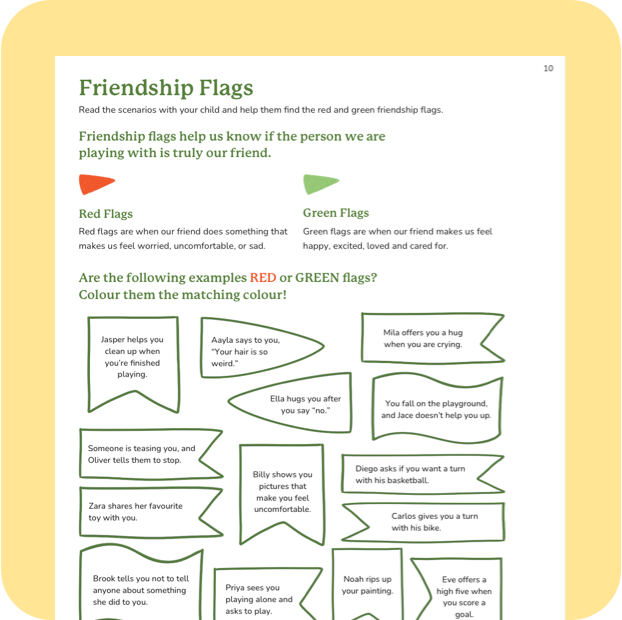
Worksheet
Friendship Flags
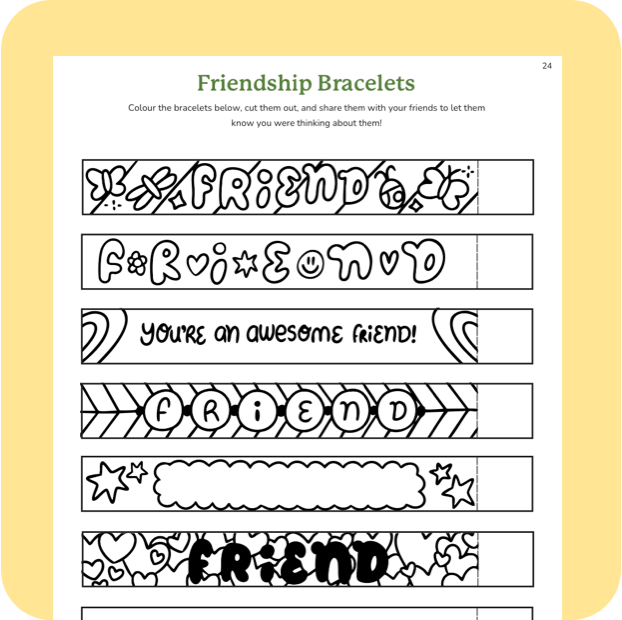
Activity
Friendship Bracelets
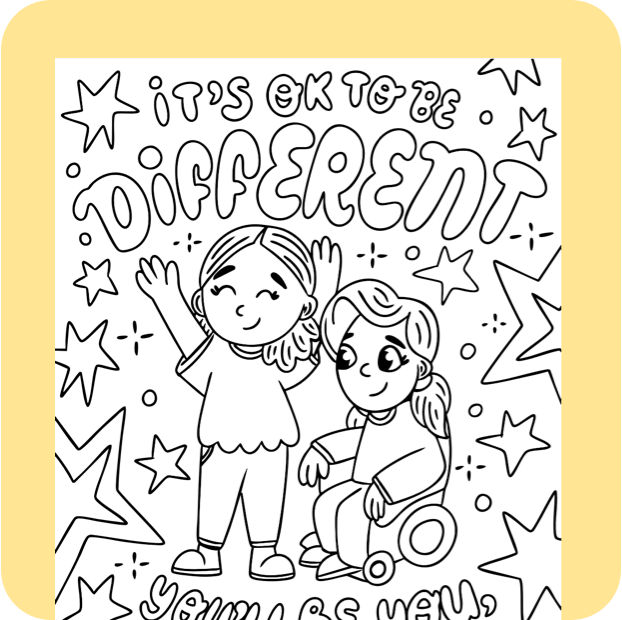
Coloring Sheet
It’s OK to be Different
After a super challenging playdate, I ordered the Friendship Toolkit because I knew we needed more help than just practicing being with friends. The friendship flags and creating bookmarks were a hit. The toolkit gave us a chance to reflect on how we want to be treated, and it opened conversations that didn’t feel forced. It was easy to follow and kept the kids engaged.
Kelsey
The Friendship Toolkit
Why printables help
Kids learn friendship by practicing it, not by being told to be nice.
Friendship is not one lesson. It is hundreds of small moments, spread over years: a kid who will not share the swing, a best friend who suddenly has a new best friend, a group that closes ranks at lunch.
The usual advice is to fix it fast. Just ignore them. Use your words. Be the bigger person. That can settle one afternoon, but it does not hand a child the actual skill, so the next hard moment lands the same way.
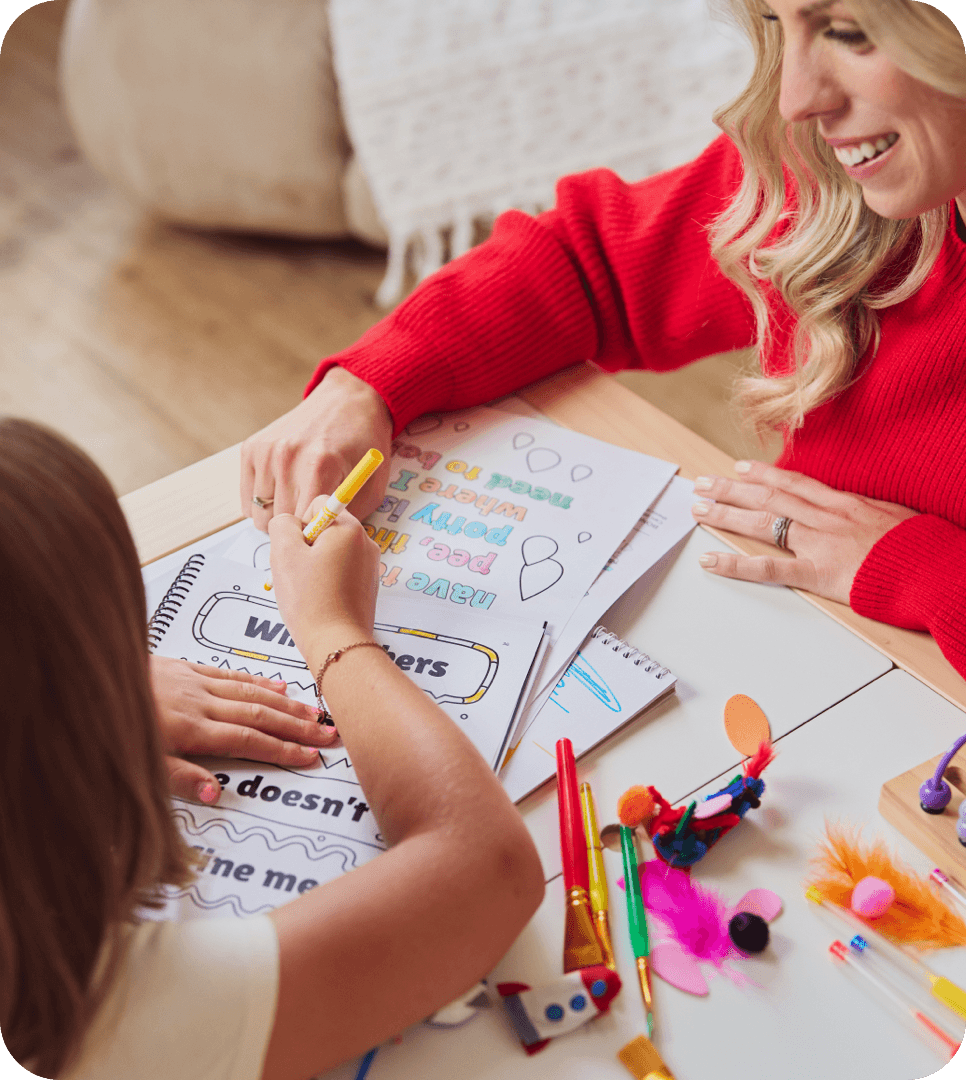
This toolkit does the opposite. The worksheets, stories, games, and activities give your child more than one way to understand the same idea, and a reason to keep coming back to it. You go through the pages together, which is the part that matters most. It tells your child that their friendship worries are worth taking seriously, that you are on their team, and that they can practice the words before they need them. For neurodivergent children, the visuals, stories, and hands-on activities make these social ideas concrete and easier to return to.
Frequently Asked Questions
What age is this toolkit for?
We made it for children ages 3 to 9. You know your child best, so you do not have to use all of it at once. Start with the pages that match what is happening right now, like a first week at a new school or a falling-out with a close friend, and come back to the rest as your child is ready.
How do I use it? Do I just give it to my child?
It is meant to be done with your child, not handed over. Print a page, sit down together, read the story or work through the activity, and let the conversation come. A few minutes at a time works better than one long sitting.
My child clams up about friendship stuff. Will they actually use this?
Often, yes, because it does not put them on the spot. Instead of asking your child to talk about a hard day head-on, you do an activity or read a story together, and the words come out sideways. Pick a page about something they are curious about, keep it light, and let them lead.
We have talked about this before and it did not really stick. Will this be different?
Most likely, because this does not rest on one talk going well. You get small pieces you can return to: a worksheet before a playdate, a game about good friends, an assertive-voice activity ready for the next real moment. The repetition is what makes it stick.
What if my child doesn't like coloring?
That's okay. The toolkit is more than coloring pages. It uses stories, games, activities, and worksheets, so you can pick what fits your child and skip what doesn't.
What if my child is the one having a hard time being kind?
That is a normal part of learning friendship, and this toolkit is built for it too. Children are still working out empathy, sharing, and repair, and the stories and activities help them see a friend's side and practice making things right, without being labeled the bad guy.
How is this different from the School Toolkit?
There is some overlap, because friendships often play out at school. The School Toolkit is about the whole school experience, including separation, big feelings, and using a strong voice in the classroom. The Friendship Toolkit goes deeper on friendship itself: making friends, repairing them, spotting red flags, and knowing who a trusted friend is. The two are designed to work well together.
There are free friendship printables everywhere. Why pay for this?
Most free printables are a single page on one idea, like a be-a-good-friend coloring sheet. This is 45 pages covering the whole picture, from making a first friend to standing up for themselves and spotting an unsafe friendship, in one place, with parent guidance and a do-it-together structure, created by a psychotherapist and a team of child-development experts. You are paying for the sequence and the guidance, not just the pages.
Would this help a neurodivergent child?
Yes. We made it with neurodivergent children in mind. The visuals, stories, games, and activities give children more than one way to understand and revisit each idea, which helps when social rules do not come automatically.
Do I need to print it, and how often can I print it?
It is designed to be printed. Print the pages you want as many times as your household needs them. You can read some pages on a screen, but the worksheets, games, and coloring pages work best on paper, where your child can write on them, color them, and come back to them.
What format is it, and what do I need to print it?
It is one combined PDF you download and print at home. The pages are sized for US Letter and scale nicely to A4 if you need it. It is designed in color, but everything holds up in black and white too. You can use it on a screen, though it is built to be printed and worked through together on paper.
What happens after I buy?
Your purchase is handled through the Nurtured First checkout, and your printable download is available right after, with your order and receipt saved in your account.
Does this replace professional support?
No. It is educational support for friendship conversations between you and your child. It does not replace therapy, medical care, a school's guidance, or advice from a qualified professional.
What is the refund policy?
Because this is a digital printable toolkit, sales are final and cannot be returned or refunded. If you bought the wrong toolkit, contact us within 24 hours of purchase and before downloading. If you have trouble accessing the file, contact support@nurturedfirst.com and we will help. Read the full refund policy at /refund-policy/.
Related support
If You Need a Different Kind of Friendship Help
A few more Nurtured First resources for the seasons around friendship.
