





Online parenting course
Parenting Your Child With ADHD
You’re not a bad parent. This self-paced course helps you understand what is driving the behaviour and know what to do next. For parents of children ages 4 to 12 with diagnosed or suspected ADHD.
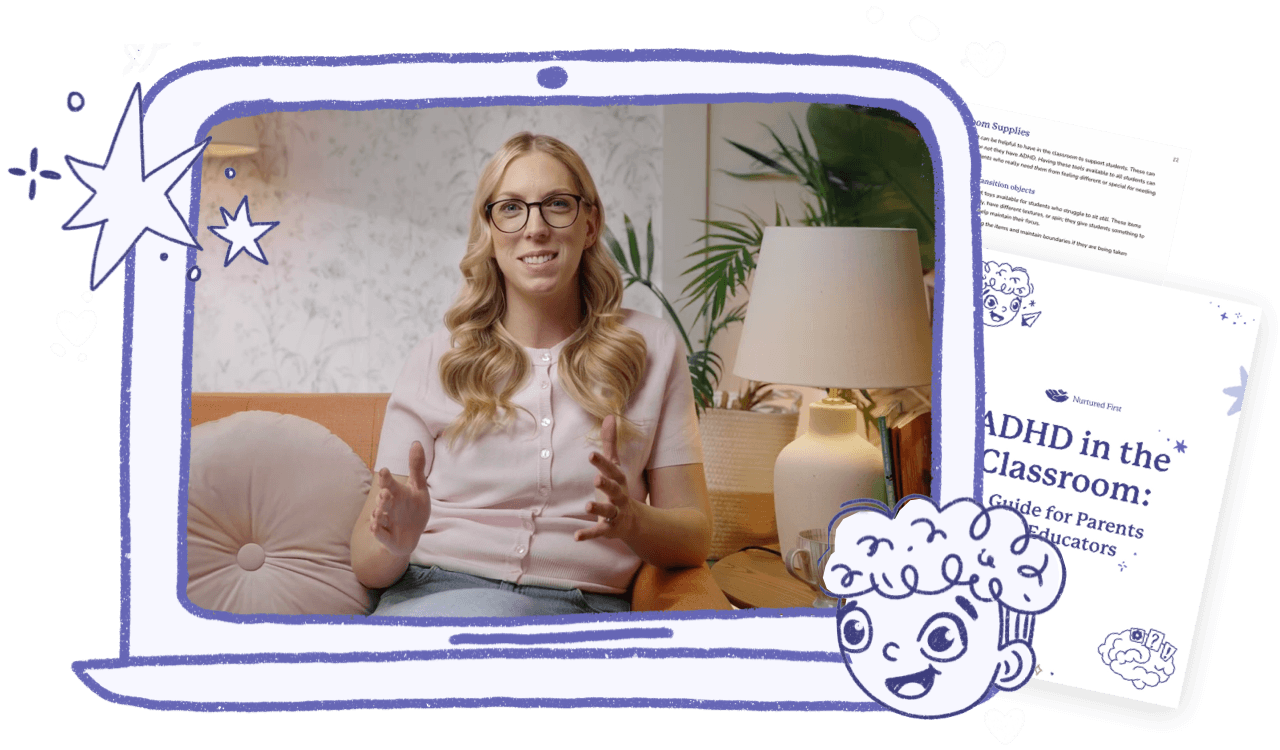
If any of these sound familiar, you're in the right place.

Mornings turned into a battle.

You tried everything, and nothing stuck.

They keep it together at school, and let go at home.
Get started today
Parenting Your Child With ADHD
Original price was: US$84.24.US$67.39Current price is: US$67.39.
- 57 short video lessons, most about 3 to 6 minutes
- A 63-page printable workbook
- An audio-only version of the whole course
- A Quick Start Path for the days you need help now
- 7 printable tools, including The Meltdown Map
- Self-paced, on any device
What you'll learn
Understanding the ADHD Brain
Why your child does what they do. Understand why waiting, listening, and switching tasks are so hard for an ADHD brain, so it stops feeling like your child is choosing to defy you.
The difference between "won't" and "can't yet". Learn when your child is refusing and when they genuinely cannot do something reliably yet, so you stop punishing a skill they are still building.
When it is more than ADHD. Spot the signs that anxiety or a stress response is mixed in, so you can give your child the support they actually need.
Calming the Big Emotions
What to do in a meltdown. Respond to hitting, throwing, screaming, and shutting down in a way that keeps everyone safer and brings the moment back down.
Why small corrections cause big reactions. Understand rejection sensitivity, why mild criticism can hit so hard, and how to support your child through it.
How to see a meltdown coming. Notice the early triggers and warning signs, so you can step in before everything boils over.
Building a Life That Works
Routines that run without nagging. Set up visuals and routines that carry the reminders for you, so you are not repeating yourself all day.
The hardest parts of the day. Get clearer tools for school stress, sibling fights, friendships, and screen-time battles.
The after-school meltdown. Make a plan for the days your child holds it together at school and falls apart the minute they walk in the door.
See what's included
57 short video lessons across the full course, plus a 63-page workbook, an audio-only version, and 7 printable tools. Open any module to see the lessons.
Jess meets you where you are, takes the blame off the table, introduces the 3 C’s, and shows you how to use the course on the days you are already running on empty.
Meet Your Guide and Important Disclaimer
Video
Welcome: You Are Not Alone (and It's Not Your Fault)
Video
Parenting Your Child With ADHD Course Workbook
The Mindset Shift That Changes Everything
Video
Why "Good Parenting" Advice Doesn't Work (and What Does)
Video
Your New ADHD Parenting Roadmap (The 3 C's)
Video
How to Use This Course (Even If You're Overwhelmed)
Video
Key Terms You'll Hear Throughout This Course
Video
Introduction: A Roadmap for the Exhausted Parent
Audio
Understand the ADHD brain underneath the behavior: executive function, the maturity gap, sensory overload, why diagnosis is tricky, and where anxiety or trauma can overlap.
ADHD 101: A Different Operating System
Video
What Does ADHD Look Like?
Video
The ADHD Spectrum: Gender, Age, and Why Diagnosis is Tricky
Video
Is it ADHD or Something Else? (Trauma, Anxiety, and Overlap)
Video
The Iceberg: What You See vs. What's Really Happening
Video
The Brain's "Manager" is Under Construction (Executive Function)
Video
The Maturity Gap: Why Your 7-Year-Old Acts Like a 4-Year-Old
Video
The "Always On" Alarm System (Sensory Sensitivity and Stress)
Video
The Gifts of the ADHD Brain (Creativity, Hyperfocus, and More)
Video
Module 1. Clarify: Why They Do That
Audio
What is really driving the big emotions, the rejection sensitivity, and the meltdowns, and how to bring your own calm, co-regulation, and safety into the moment.
Why Are The Emotions So Big?
Video
When Criticism Cuts Deep: Understanding Rejection Sensitive Dysphoria (RSD)
Video
Why Punishment Makes It Worse (And What to Do Instead)
Video
The #1 Strategy: Your Own Calm (The Hardest Part)
Video
The Co-Regulation Toolkit
Video
When Things Get Physical (Handling Aggression)
Video
Finding the Triggers (The Meltdown Map)
Video
Module 2. Connect: Calming the Chaos
Audio
Build the outside supports for skills your child is still growing into: scaffolding, visuals, time blindness, transitions, focus, and emotional safety.
Be Their Brain: The Power of Scaffolding
Video
Stop Repeating Yourself: The Power of Visuals
Video
Fixing "Time Blindness" (and Being On Time)
Video
Taming Transitions (Without the Fight)
Video
Focus and Organization Hacks
Video
Building Emotional Safety: RSD, Trust, and Communication
Video
Module 3. Collaborate (Part 1): Building the Support System
Audio
Bring it all into daily life: routines, bedtime, boundaries, boredom, friendships, siblings, screens, and the after-school crash.
The ADHD-Friendly Lifestyle: Sensory Needs, Rest, and Pacing
Video
Routines Without the Nagging (Yes, Really)
Video
Boundaries That Actually Stick
Video
When They Break the Rules (Problem-Solving over Punishment)
Video
The Fix for "I'm Bored!" (The Need for Stimulation)
Video
The Friendship Coach: Helping with Social Struggles
Video
Siblings: When "Fair" Isn't "Equal"
Video
Screen Time: The Dopamine Drain and How to Manage It
Video
Why Is My Child Well-Behaved at School but Explosive at Home?
Video
Module 4. Collaborate (Part 2): Tackling Daily Life
Audio
Look after yourself too: your own ADHD, burnout and guilt, talking to teachers and grandparents, and playing the long game of connection.
When You Have ADHD Too: Strategies for the Parent
Video
Beating Burnout and Handling "Parent Guilt"
Video
Working with Teachers
Video
Handling the Grandparents (and Their "Advice")
Video
The Long Game: Connection First
Video
Module 5. Sustain: Taking Care of You (and Advocating for Them)
Audio
Jump straight to the challenge taking over your house today and get a short, focused video for it.
How to Use the Troubleshooting Library
Video
My Child Forgets the Rule Immediately (e.g., Running in the Road)
Video
Handling Lying and Defensiveness
Video
When They Antagonize Others Out of Boredom
Video
Toileting Issues, Soiling, and Avoidance (The ADHD Link)
Video
When Your Child Shuts Down ("I Don't Know" / "I Don't Want to Talk")
Video
Negative Self-Talk and "Doom Loops"
Video
My Child Says I'm Being "Sarcastic" When I Try to Stay Calm
Video
Handling Misophonia (When Sounds Cause Rage)
Video
Respecting Personal Space (The "Touchy-Feely" Child)
Video
The Friendships Are Fading (When Peers Pull Away)
Video
How do you tell your child they have ADHD?
Video
Talking About Medication (And When They Won't Tell You How They Feel)
Video
Closing: You've Got This
Video
Module 6. Troubleshooting & Common Challenges (The Reference Library)
Audio
See how Jess teaches
This is a real lesson from inside the course. Watch a few minutes and you will know if Jess is the kind of teacher you have been looking for.

Jess VanderWier
Registered Psychotherapist and Mom with ADHD
Jess VanderWier is a Registered Psychotherapist and the founder of Nurtured First. She has spent years supporting children with ADHD and helping their parents and families navigate the diagnosis and thrive.
She teaches the way a good friend would: warm, honest, and practical, using real, everyday examples you will recognize from your own home and showing you what to try next.
What makes this course different

Watch, don't just read.
Jess models every strategy on camera: her tone, her pacing, and what she does when a child pushes back. You see how staying calm and co-regulating actually look and sound, instead of reading a description and hoping you get it right.

The 3 C's framework.
Every strategy hangs on one simple, memorable structure: Clarify, Connect, Collaborate. In the middle of a meltdown you do not need a textbook. You need three steps you can actually remember.

A troubleshooting library for the hard moments.
Module 6 is a reference library of 14 short videos for specific challenges: lying, toileting, misophonia, negative self-talk, fading friendships, and more. Jump straight to the problem you are facing and get a focused answer in minutes.

Built for a brain that is running on empty.
Most lessons are 3 to 6 minutes. There is a Quick Start Path for crisis days and an audio version for when you cannot sit and watch. It is made for the parent who can barely get through the day, let alone hours of video.

Created by a therapist who lives it.
Jess does not just study ADHD. She has ADHD, and these strategies have been tested in her own home, on her own chaotic mornings. This is help from someone who has needed it herself, not just studied it.

It grows with your child.
The questions you have about your 4-year-old are not the ones you will have about your 12-year-old. Come back to the troubleshooting library, the workbook, and the daily-life modules at each new stage, whenever you need them.
You can work with your child's brain, not against it.
This was never about a calm-every-day house, but about fewer meltdowns that spiral, quicker repair when they happen, and a child who feels understood instead of always in trouble. On the hardest days, begin with the Quick Start Path or the audio version, and come back to the rest when you have more to give.
Original price was: US$84.24.US$67.39Current price is: US$67.39.
This course comes with our 30-day guarantee. Read the refund policy.
Frequently asked questions
Parents of children ages 4 to 12 who have diagnosed or suspected ADHD and are dealing with ADHD-related challenges at home, at school, or both.
No. It is for parents who have a child with a diagnosis and for parents who are wondering if ADHD might be part of the picture. It can help you understand the patterns and support your child, but it does not replace a formal assessment.
Books can be genuinely helpful, and plenty of parents start there. The difference here is that you watch Jess actually do it: the tone, the pacing, the exact words, and what to do when your child pushes back instead of following the script. You also get the workbook, the printable tools, and a troubleshooting library you can search in the moment. If a book has already given you what you need, you may not need this. If you have read the advice and still freeze when the meltdown starts, this shows you the part a book cannot.
Most core lessons are about 3 to 6 minutes, and the troubleshooting videos are about 2 to 4. The whole course is about 3.5 hours, built in small pieces on purpose, so you can learn one idea while the kettle boils and still use it that afternoon.
Jess built the course with overwhelmed parents in mind. The lessons are short, there is an audio-only version, and the Quick Start Path lets you begin without finishing the whole course first.
Yes. There are no scheduled sessions or deadlines. You can start with the Quick Start Path, jump to a troubleshooting lesson, or move through the modules in order.
No. Medication is an important topic for some families, but it is outside the scope of this course. Please talk with your child’s healthcare provider about medication questions.
No. This is parenting education. It does not diagnose ADHD, replace therapy, replace medical care, or replace school-based support. If you are concerned about your child’s safety, mental health, development, or diagnosis, please work with a qualified professional.
You have 30 days from purchase to request a course refund if it is not the right fit and you have completed 50 percent or less of the course content. See the refund policy for the full terms.
Related resources
Support your child's whole world
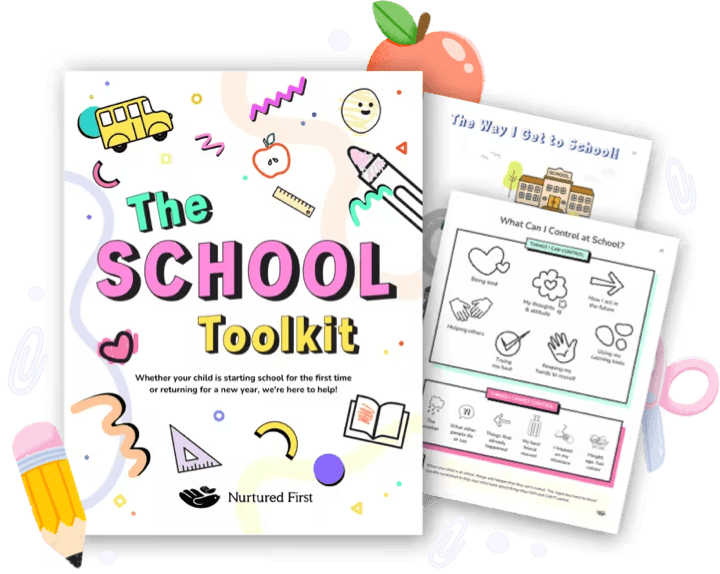
The School Toolkit
For when leaving you is the hardest part of school. Printable worksheets, activities, and a five-step plan you and your child work through together, so a calm drop-off comes from feeling ready and connected, not a rushed goodbye, for ages 3 to 9.
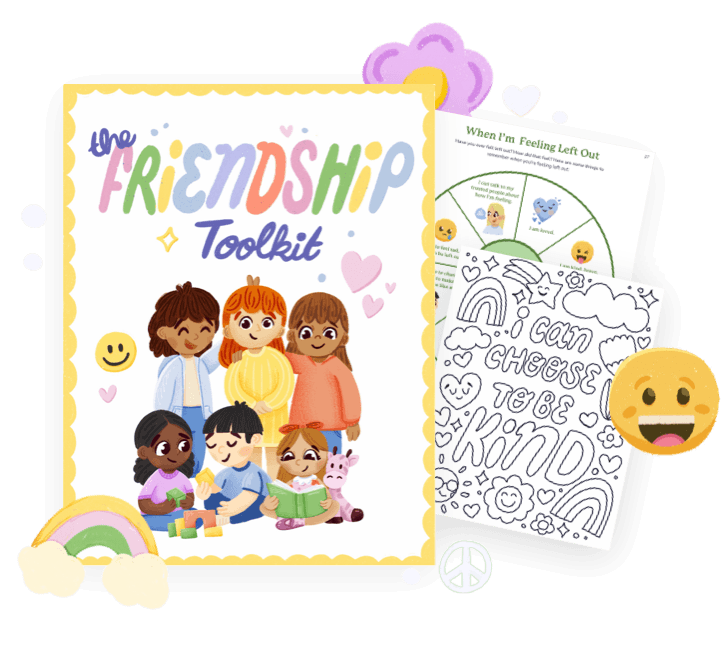
The Friendship Toolkit
For the friendship struggles that hurt more than you expected. Printable stories, activities, and games you and your child go through together, so they make friends, work through the rough patches, and stand up for themselves with real words, for ages 3 to 9.
Confident Digital Parenting
For when screens have turned into a daily fight. Video lessons that explain why screens pull so hard, help you lead through connection, not control, and make you the person your child comes to when something online goes wrong, for ages 6 to 14.
