






Printable toolkit
The Friendship Toolkit
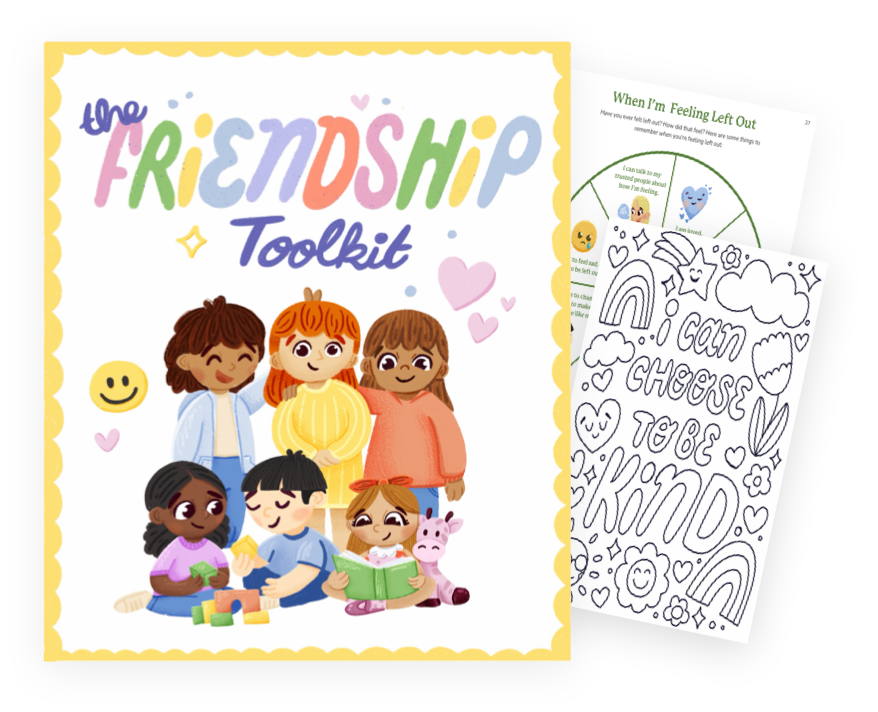
Help your child make friends, work through the rough patches, and stand up for themselves, with real words they can use. It’s a printable set of worksheets, activities, stories, and games you and your child go through together, one page at a time, so friendship is something you practice side by side, not something they figure out alone.
When friendship gets hard
This is for the friendship struggles that hurt more than you expected.

Your child wants a friend, but freezes when it is time to join in.
A friend is being unkind, and it is landing harder than you thought it would.
You want your child to build the kind of friendships that last.
What you get
What comes in the printable toolkit
US$23.39
- 50 printable pages to print and work through together
- Stories your child reads with you, so the big friendship ideas land in a way they remember
- Games that make practicing friendship feel more like play than a lesson
- Hands-on worksheets, plus activities and coloring sheets, for the kids who learn by doing
- Practical tools and strategies for the friendship moments that come up most
- Parent tips from Jess and the expert team
Buy once and print it as often as you like for your own household. Pull out the page that fits what is happening this week, sit down together, and follow your child’s lead from there.
What your child will learn
Making friends and joining in
What it means to be a friend, and how to be a good one
How to make new friends and start a conversation with someone new
What to do when someone says no or does not want to play
A strong voice and steady confidence
How to use an assertive, strong voice when something is not okay
How to stand up for themselves, and for their friends
How to build real confidence and cope with the worries that friendship can bring
Knowing a good friend from an unsafe one
How to spot a good friend, and the red flags that a friendship is not safe
Who their trusted friends are, and what a trusted friend should never do
What to do when a friend makes them uncomfortable, and why kindness, respect, and the differences between friends are worth celebrating

Created by Jess and a team who know how much friendship matters.
The Friendship Toolkit was created by Jess VanderWier, a Registered Psychotherapist and mom of three, with a team of experts in child development. We know that the friendships of the early years shape how a child sees themselves for years to come, and we know how much the hard parts can hurt. The goal is to help your child understand what friendship really means, feel safe and valued by the friends they choose, and find their voice when a friendship does not feel right. This is a practical tool for guiding those conversations, not therapy or a replacement for professional support.
What's inside
A look inside the toolkit
A small preview of the real pages, so you can see how clear and child-friendly they are before you buy.
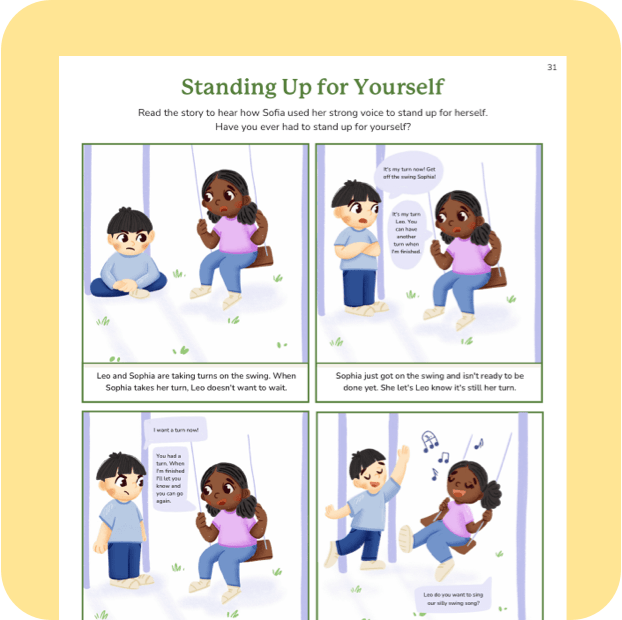
Story
Standing up for yourself
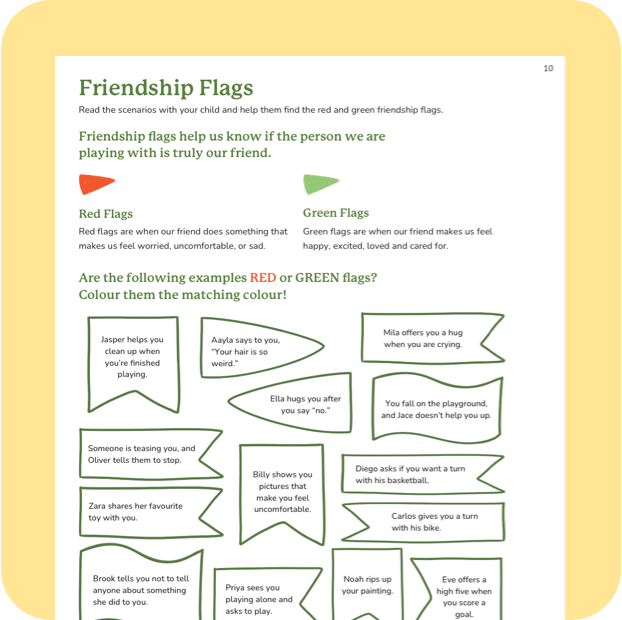
Worksheet
Friendship Flags
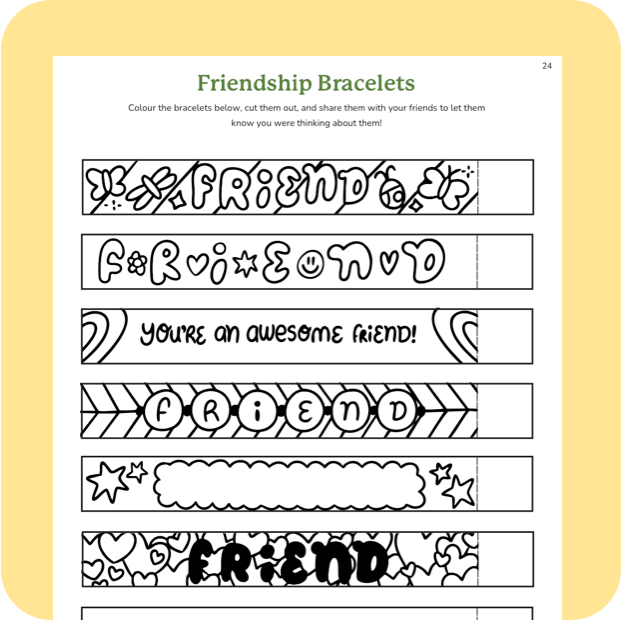
Activity
Friendship Bracelets
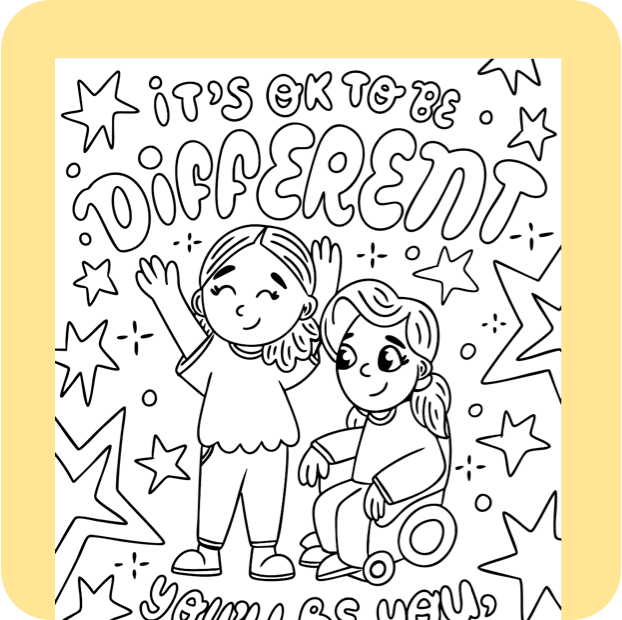
Coloring Sheet
It’s OK to be Different
If you wish you knew what to say when friendship gets hard, the pages are ready.
Picture the version where your child has the words before they need them: how to walk up to a new group, what to say when a friend is unkind, how to tell a real friend from one who is not. It does not make childhood friendship painless, but it means your child is not working it out alone, and neither are you. You can start with a single page tonight, and let the rest wait until the next real moment.
US$23.39
Frequently asked questions
We made it for children ages 3 to 9. You know your child best, so you do not have to use all of it at once. Start with the pages that match what is happening right now, like a first week at a new school or a falling-out with a close friend, and come back to the rest as your child is ready.
It is meant to be done with your child, not handed over. Print a page, sit down together, read the story or work through the activity, and let the conversation come. A few minutes at a time works better than one long sitting.
Often, yes, because it does not put them on the spot. Instead of asking your child to talk about a hard day head-on, you do an activity or read a story together, and the words come out sideways. Pick a page about something they are curious about, keep it light, and let them lead.
Most likely, because this does not rest on one talk going well. You get small pieces you can return to: a worksheet before a playdate, a game about good friends, an assertive-voice activity ready for the next real moment. The repetition is what makes it stick.
That is okay. The toolkit is more than coloring pages. It uses stories, games, activities, and worksheets, so you can pick what fits your child and skip what does not.
That is a normal part of learning friendship, and this toolkit is built for it too. Children are still working out empathy, sharing, and repair, and the stories and activities help them see a friend’s side and practice making things right, without being labeled the bad guy.
There is some overlap, because friendships often play out at school. The School Toolkit is about the whole school experience, including separation, big feelings, and using a strong voice in the classroom. The Friendship Toolkit goes deeper on friendship itself: making friends, repairing them, spotting red flags, and knowing who a trusted friend is. The two are designed to work well together.
Most free printables are a single page on one idea, like a be-a-good-friend coloring sheet. This is 50 pages covering the whole picture, from making a first friend to standing up for themselves and spotting an unsafe friendship, in one place, with parent guidance and a do-it-together structure, created by a psychotherapist and a team of child-development experts. You are paying for the sequence and the guidance, not just the pages.
Yes. We made it with neurodivergent children in mind. The visuals, stories, games, and activities give children more than one way to understand and revisit each idea, which helps when social rules do not come automatically.
The toolkit is licensed to the registered user and their household for personal, non-commercial use. Files must not be shared, distributed, or copied for other households or classrooms.
It is designed to be printed. Print the pages you want as many times as your household needs them. You can read some pages on a screen, but the worksheets, games, and coloring pages work best on paper, where your child can write on them, color them, and come back to them.
It is one combined PDF you download and print at home. The pages are sized for US Letter and scale nicely to A4 if you need it. It is designed in color, but everything holds up in black and white too. You can use it on a screen, though it is built to be printed and worked through together on paper.
Your purchase is handled through the Nurtured First checkout, and your printable download is available right after, with your order and receipt saved in your account.
No. It is educational support for friendship conversations between you and your child. It does not replace therapy, medical care, a school’s guidance, or advice from a qualified professional.
Because this is a digital printable toolkit, sales are final and cannot be returned or refunded. If you bought the wrong toolkit, contact us within 24 hours of purchase and before downloading. If you have trouble accessing the file, contact support@nurturedfirst.com and we will help. Read the full refund policy on the Refund Policy page.
Related support
If you need a different kind of friendship help
A few more Nurtured First resources for the seasons around friendship.
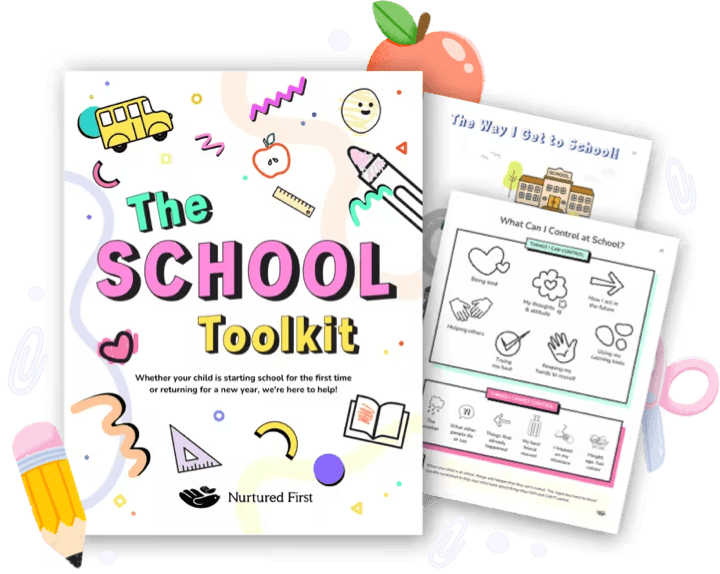
The School Toolkit
For when leaving you is the hardest part of school. Printable worksheets, activities, and a five-step plan you and your child work through together, so a calm drop-off comes from feeling ready and connected, not a rushed goodbye, for ages 3 to 9.
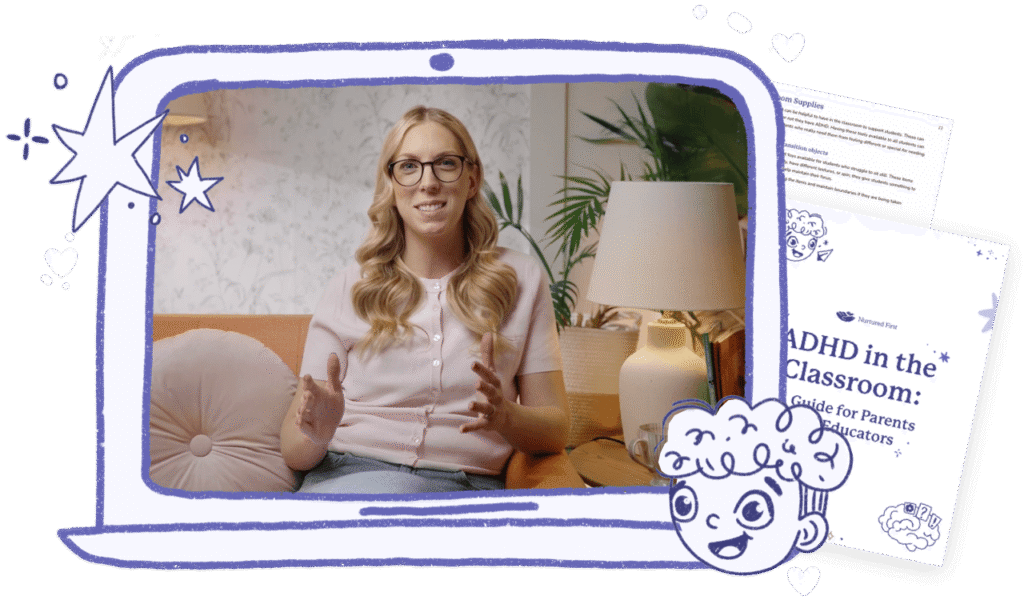
Parenting Your Child With ADHD
For mornings, meltdowns, and repeating yourself when ADHD is part of the picture. Video lessons and a troubleshooting library that walk you through the ADHD brain and what to do next, from a therapist who has ADHD herself, for ages 4 to 12.
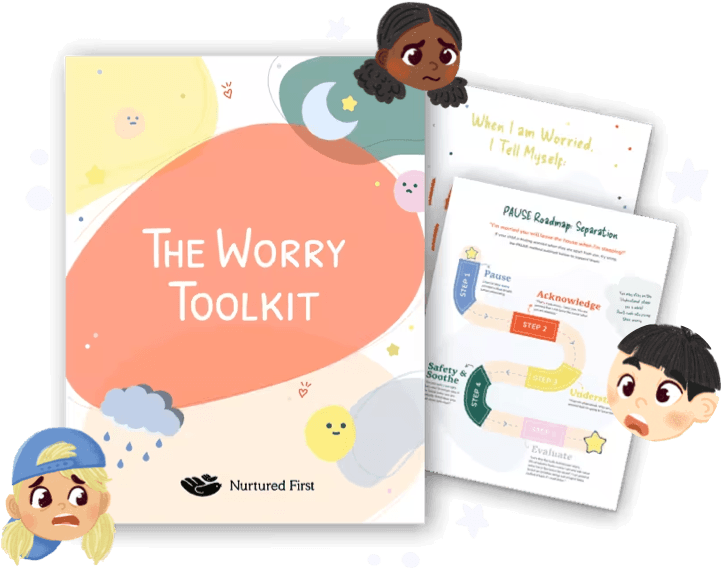
The Worry Toolkit
For the worries that show up at bedtime, before school, and out of nowhere. Printable stories, activities, and journal pages you and your child work through together, so a big worry becomes something they know how to handle, for ages 3 to 9.
