






Online parenting course
Confident Digital Parenting
For parents of children ages 6 to 14, when the screens have turned into a daily fight and you are not sure what your child is seeing when you are not in the room.

If any of these sound familiar, you're in the right place.

Turning it off ends in a meltdown every time.
You gave the five-minute warning. You gave the two-minute warning. The screen still goes off to screaming, the tablet gets thrown, and somehow you are the one who ends up yelling. You have tried timers and taking it away for a week, and the next night it starts all over again.

You don't know what they're seeing when you're not there.
The apps change faster than you can keep up. You worry about what comes up in a search, the messages from people you have never met, the videos that autoplay one after another. You want to protect them, but you feel a step behind the technology and unsure how to even start the conversation.

"I'm the only one without a phone."
Half their class has one, and the campaign is relentless. You can feel screens quietly taking the place of the talks in the car and the time at the table, and part of you wonders whether holding the line is making you the mean parent. You want to stay close to your child, not police them.
Get started today
Confident Digital Parenting
US$44.49
- 10 video lessons, about 1 hour and 40 minutes in total
- A simple framework for managing every screen in your home
- Self-paced, on any device
- Yours to revisit whenever you need it
What you'll learn
Understand Why It's So Hard to Turn Off
The science under the struggle. Learn what the dopamine hit from games and endless feeds does to a developing brain, so "just turn it off" stops feeling like a character flaw in your child.
Why willpower isn't the problem. Understand why your child genuinely cannot manage a pull this strong on their own yet, and why that means they need you as their guide, not another consequence.
What the behavior is asking for. See the need underneath the meltdown at screen-off time, so you can respond to that instead of only fighting the symptom.
Make Your Relationship the Safeguard
Become the safe expert they turn to. Build the kind of trust that makes your child come to you when something online scares or confuses them, instead of hiding it.
Be the anchor they belong to. Learn why a child who feels they belong at home is less likely to go looking for belonging in unsafe corners of the internet.
Hold firm, loving limits. Step into the role of confident leader and protect the sleep, play, and rest your child needs, without shaming or punishing them for wanting more.
Handle the Screens in Your Real Life
End the nightly turn-off war. Set up predictable daily rhythms that cut the arguing, so the device going off stops being a negotiation every single time.
Talk about the scary stuff safely. Learn how to bring up pornography, bullying, and unsafe people in a way that prepares your child instead of frightening them.
Navigate gaming, YouTube, and the phone question. Get a clear way through video games, autoplay, apps like Snapchat, TikTok, and Instagram, and the "everyone else has one" pressure for a first phone.
See what's included
10 video lessons in one self-paced course, about 1 hour and 40 minutes in total. They build from why screens are so hard to manage, through the connection-first method, into specific plans for boundaries, TV and YouTube, gaming, social media, online safety, and your family's tech contract. Here is every lesson.
10 lessons, about 1 hour and 40 minutes.
Why Screen Time Is Today's Biggest Parenting Challenge
Video
The "Just One More Minute!" Problem: Understanding Your Child's Brain & The Draw of Screens
Video
The Connection Solution: How Your Relationship Keeps Your Child Safe Online
Video
How to Set Screen Time Boundaries That Actually Work
Video
A Parent's Guide to Healthy TV & YouTube Habits
Video
A Parent's Guide to Understanding the World of Video Games
Video
A Parent's Guide to Social Media (Snapchat, TikTok, and Instagram)
Video
Essential Internet Safety Rules for Your Family
Video
Creating Your Family's Tech Safety Contract
Video
Final Thoughts: Modeling Healthy Habits & Staying Connected
Video

Jess VanderWier
Registered Psychotherapist and mom of three
Jess VanderWier is a Registered Psychotherapist and the founder of Nurtured First. In her practice she watched screens and social media go from a side issue to the thing parents worried about most, and she built this course for the families who felt overwhelmed and alone with it.
Her approach rests on one belief: a strong parent-child relationship is the most powerful tool a parent has for keeping a child safe online. She pairs what the research says about the developing brain with warm, practical, connection-focused strategies, and she teaches the way a good friend would, warm, honest, and full of real examples you will recognize from your own living room.
As a mom of three, she knows the worry of raising kids in a digital world from the inside, not just from across a therapy room.
What makes this course different

You watch a therapist handle it, not just read the rules.
You see Jess have the real conversations: the calm voice at screen-off time, the words for “everyone else has a phone,” the tone that keeps a child talking. You learn what connection actually sounds like instead of guessing.

It runs on connection, not control.
Most tech advice leans on monitoring apps, lockouts, and bigger consequences. Those can win a single night and become the next thing you fight about. This course builds cooperation through your relationship, so the change holds once the novelty wears off.

It grows from the first tablet to the first phone.
What you need for a six-year-old on YouTube is not what you need for a twelve-year-old eyeing Snapchat. Come back as your child moves into new apps, new pressures, and more independence.

Built for the parent who feels behind on the tech.
You do not need to understand every app to parent well around it. The course gives you the principles and the conversations, so you stay the steady adult even when your child knows the platform better than you do.

It meets you in real life, even if screens are already a problem.
This is not built for the family who did everything early and perfectly. If gaming is already a battle and the apps are already on the phone, you will get tools to reset from where you actually are.

Short lessons for a tired parent.
The course is built in small pieces, so you can learn one idea after the kids are down and use it the next afternoon, instead of saving a long course for a free evening that never comes.
Screens can be part of family life without taking it over.
This was never about a screen-free house, which is not real life, but about fewer fights at switch-off time and a child who comes to you when something online goes wrong. The ten lessons fit into an evening or two, so you can try the framework at home this weekend.
Frequently asked questions

Parents and caregivers of children ages 6 to 14 who are tired of fighting about screens and worried about what their child is running into online. It is most useful for elementary and middle-school families who are starting to navigate phones, gaming, and social media.
No. The ideal is to start early, but this course is built for the reality most parents are actually living. You will learn how to set new boundaries, reconnect, and step back into the role of confident leader, even if screens are already a daily battle and the apps are already on the phone.
This is one of the hardest and most common standoffs. The course gives you specific words to validate how left out your child feels while still holding the line, and it shows you how connecting with other parents in your child’s class can turn “everyone has one” into a shared agreement to wait.
Yes, and it matters even more here. Children with ADHD carry a higher risk of online addiction and impulsive choices, and the course explains why and walks you through the supportive, firm boundaries that help your child the most.
Blocking software and a good article can both help, and plenty of parents start there. The difference is that control tools manage the device, and this teaches you to lead the child. You watch Jess have the actual conversations, you get scripts for the moment the screen goes off, and you build a family tech plan together instead of policing one from the outside. If a settings menu has already solved it for your family, you may not need this. If you have locked everything down and the fights and the worry are still there, this is the part the apps leave out.
The course is ten short video lessons, about an hour and forty minutes in total. Most run only a few minutes, with the two longest just over twenty minutes, so you can learn one idea in a spare moment and use it that day, and skip straight to the screen battle you are facing right now.
Yes. The course is completely self-paced. There are no scheduled sessions and no deadlines. Watch it in order, or jump to gaming, the phone question, or online safety, and revisit any lesson whenever you need it.
No. This is parenting education. It does not diagnose anything, and it does not replace therapy, medical care, or other professional support. If you are worried about your child’s safety or mental health, online or off, please work with a qualified professional.
You have 30 days from purchase to request a course refund if it is not the right fit and you have completed 50 percent or less of the course content. See the refund policy for the full terms.
Related resources
Support your child's whole world

Parenting Your Child With ADHD
For mornings, meltdowns, and repeating yourself when ADHD is part of the picture. Video lessons and a troubleshooting library that walk you through the ADHD brain and what to do next, from a therapist who has ADHD herself, for ages 4 to 12.
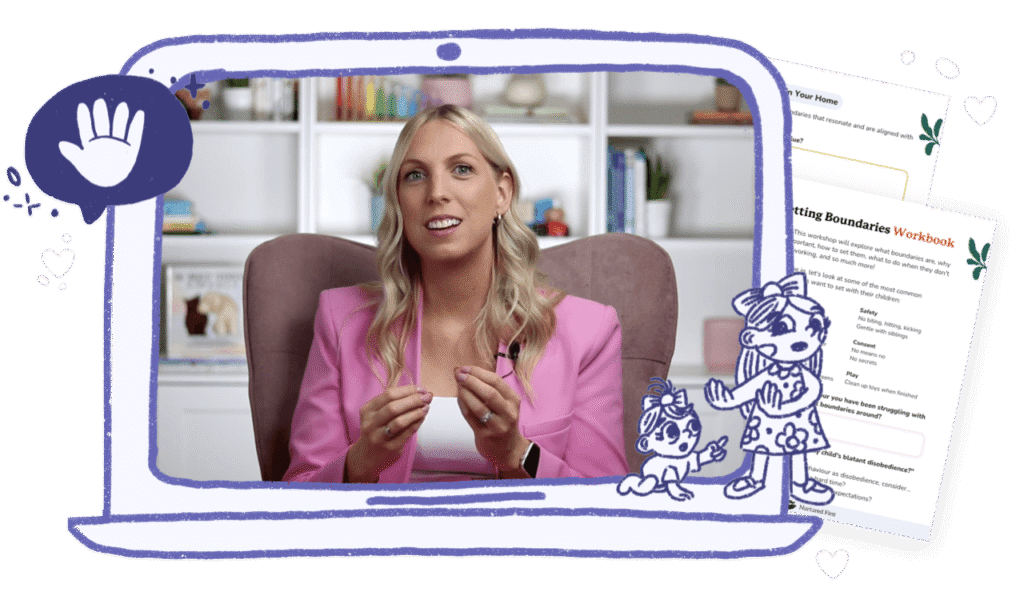
Setting Boundaries
For when you cannot tell whether you are being too soft or too strict. Video lessons on what a boundary really is, how to hold it without yelling, and what to say in the daily battles, for ages 1 to 12.
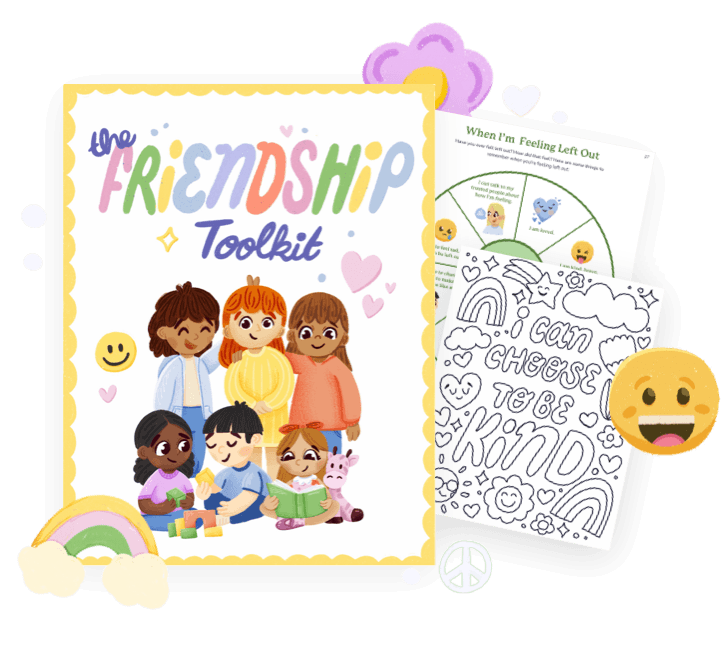
The Friendship Toolkit
For the friendship struggles that hurt more than you expected. Printable stories, activities, and games you and your child go through together, so they make friends, work through the rough patches, and stand up for themselves with real words, for ages 3 to 9.
