





Online parenting course
Separation and Goodbyes
For parents of children ages 1 to 12, when drop-offs end in tears, your child clings to your leg, and every goodbye feels like it might break something.
If any of these sound familiar, you're in the right place.

Every drop-off turns into the same battle.
Your child cries and clings to your leg the moment you reach for your bag. You have a bus to catch or a shift to start, and you end up peeling them off you and walking away with a knot in your stomach, wondering if leaving like that is quietly doing damage.

A big first goodbye is coming, and you want to get it right.
The first day of daycare, the first morning of school, or even an afternoon with a babysitter so you can finally breathe. You want to prepare your child for it instead of springing it on them, and you are not sure where to start.

You have tried the tips, and your sensitive child still falls apart.
You have read the advice and used the one-line script everyone swears by, and it does not fit the deeply feeling kid in front of you. You need an approach built for a child who feels things hard, not a one-size-fits-all trick.
Get started today
Separation and Goodbyes
US$44.49
- The complete Separation and Goodbyes workshop, start to finish
- A printable PDF workbook
- A 5-step framework for separations
- Jess's favorite children's books for supporting separation
- A bonus babysitter's guide
- A workshop reference list
What you'll learn
Understand What's Really Going On
Why goodbyes feel so big. Learn the attachment science under the clinging and the tears, so a hard drop-off stops feeling like a battle of wills and starts to make sense.
What the clinging is actually asking for. Get curious about the need underneath the protest, instead of only trying to make the crying stop.
Why the goodbye is hard on you, too. Understand why your child's tears hook your own guilt and panic, so you can steady yourself instead of getting pulled under in the moment.
Make the Goodbye Easier
A plan to bring down the tears at drop-off. Walk in with a clear, repeatable way to handle the handover, instead of improvising at the door every morning.
What to say when your child begs you not to go. Get specific words for the "Don't leave me!" moment, so you are not frozen and guessing while everyone watches.
Fewer after-school meltdowns. Make a plan for the days your child holds it together all day and falls apart the minute they are back with you.
Stay Connected, Even Apart
Keep your bond strong through school and daycare. Learn how to hold onto closeness when your child starts spending their days away from you.
Leave your child with someone new without the dread. Give your child ways to feel secure with a caregiver who is not you, so time apart is calmer for both of you.
Help your child build a bond with their teacher. Set your child up to trust the adult who will be there when you cannot be.
See what's included
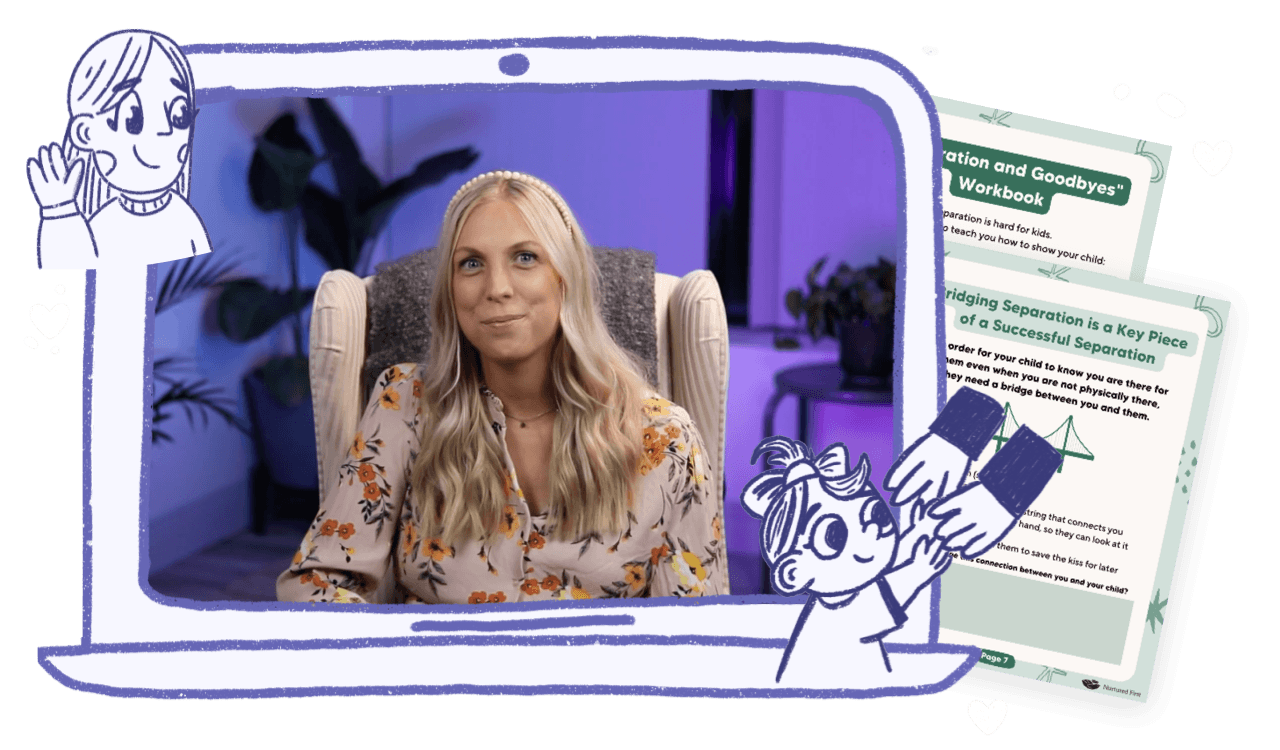
One focused video workshop of about 52 minutes, also available as audio. Alongside the workshop you get a printable PDF workbook, plus three bonus resources: a list of Jess's favorite children's books for separation, a babysitter's guide, and a workshop reference list. It is short enough to watch in a single sitting, and the workshop moves through three parts.
Start with what is really going on. Jess walks through the science of attachment under the clinging, why a little separation is a struggle worth helping your child through rather than avoiding, and why drop-off can pull so hard on your own feelings as a parent.
The science of attachment, and why separation is hard
Topic
Why separation is an important struggle for kids to experience
Topic
Why goodbyes can be so triggering for you, too
Topic
Then the practical tools for the clinging and the protest. How to prepare your child for time away before the day arrives, how to help them settle with a new caregiver, and how to steady yourself through the transitions that are hard on you as well.
How to prepare your child for time away from you
Topic
Practical tools for settling your child with a new caregiver
Topic
Coping strategies for you during the hard transitions
Topic
Finally, the framework that ties it together. A 5-step framework for separations, real-life stories about babysitters, school, and sleep, and the exact words to use so your child feels close to you even when you are not in the room.
The 5-step framework for separations
Topic
Real-life stories: babysitters, school, and sleep
Topic
The words and strategies to help your child feel close
Topic

Jess VanderWier
Registered Psychotherapist and mom of three
Jess VanderWier is a Registered Psychotherapist and the founder of Nurtured First. She has spent years helping children and their parents through daycare drop-offs, first days of school, and goodbyes that end in tears, with an approach rooted in attachment, connection, and a child’s temperament rather than in willpower and tricks.
Her work on separation grew out of her own goodbyes with her three kids, so she knows the lump in your throat at the classroom door from the inside, not just from across a therapy room. She teaches the way a good friend would, warm, honest, and full of real examples you will recognize from your own front step.

Calmer goodbyes, and a child who feels safe.


Understanding that separation is the biggest struggle that a child can face has transformed our parenting. I felt so much more confident dealing with drop-off struggles when I understood she wasn’t trying to make me late for work. The 5-step process was exactly what we needed to implement! Thank you!!
Read moreRead less
My sensitive son started kindergarten last week. My wife and I were so nervous because he’s never spent more than a few hours away from us. We used all the tools in your Separations and Goodbyes course, and it helped SO MUCH! Thank you for teaching us that connection is the cure to dysregulation.
Read moreRead less
We did your separations and goodbyes course before sending our daughter to daycare for the first time. Every question I had was answered inside this course. It’s like you’ve been part of the discussions we’ve been having inside our home! We feel so much less guilty and more ready for sending her to daycare now.
Read moreRead less
What makes this course different

No sneaking out, and no crying it out.
Most separation advice tells you to slip away while your child is distracted, or to hold firm and let them cry until they give up. This course does the opposite. It uses closeness, because connection, not distraction or distress, is what helps a child feel safe enough to say goodbye.

It treats the goodbye as a need, not behavior to manage.
The clinging is not something to correct with a braver-goodbye sticker chart or a reward for not crying. It is a signal about how safe your child feels, so you work with the real cause. That is what makes the change hold, instead of easing for a week and coming back.

Built for the deeply feeling child.
If the one-size-fits-all scripts have never fit your sensitive or strong-willed kid, this is built for you. The approach starts from your own child’s needs, so you can use it in a way that actually fits the child in front of you.

You watch the goodbye done well.
Most advice is words on a page. Here you see the tone, the pacing, and the body language of a calm goodbye, the things a script can never capture, so you know what a connected goodbye actually looks and sounds like.

It grows with your child.
The daycare drop-off at two is not the kindergarten goodbye at five or the sleepover nerves at nine. The approach holds across all of it, so you come back to it at each new separation as your child grows.
Goodbyes can get easier, for both of you.
This was never about a child who never sheds a tear at the door, but about a quicker settle after the tears and a child who feels close to you even while you are apart. Watch the workshop, keep the 5-step framework close, and walk into drop-off knowing what to say.
Frequently asked questions

Parents and caregivers of children ages 1 to 12 who are dealing with tears at drop-off, clinging, or anxiety around school, daycare, a babysitter, or bedtime, and who want an approach that protects the relationship instead of just ending the goodbye faster.
Yes. It was built with deeply feeling children in mind. Rather than hand you a single script to memorize, it helps you read what your particular child needs in a goodbye, so you can shape the tools around the kid you actually have.
That is exactly what it is for. You will learn why your child cries at the door and get a practical, repeatable way to help them feel closer to you and to their caregiver, so the handover stops being a daily battle.
Free tips can genuinely help, and plenty of parents start there. The difference is that a tip tells you what to do at the door, and this shows you why the goodbye is so hard in the first place, then walks you through what to say and do once your child is clinging and the tears have started. You also get the 5-step framework, the workbook, and the babysitter’s guide. If a free tip has already settled your drop-offs, you may not need this. If you have tried them and the next goodbye is just as hard, this is the piece they tend to leave out.
It is a single video workshop of about 52 minutes, also available as audio, so you can listen on the school run. You can watch the whole thing in one nap time, or in a few short sittings, and start using it at the very next goodbye.
Yes. The course is completely self-paced. There are no scheduled sessions and no deadlines. Watch it in order before a big first day, or jump straight to the part you need most.
No. This is parenting education. It does not diagnose anything, and it does not replace therapy, medical care, or other professional support. If you are worried about your child’s anxiety, mental health, or development, please work with a qualified professional.
You have 30 days from purchase to request a course refund if it is not the right fit and you have completed 50 percent or less of the course content. See the refund policy for the full terms.
Related resources
Support your child's whole world
Solving Bedtime Battles
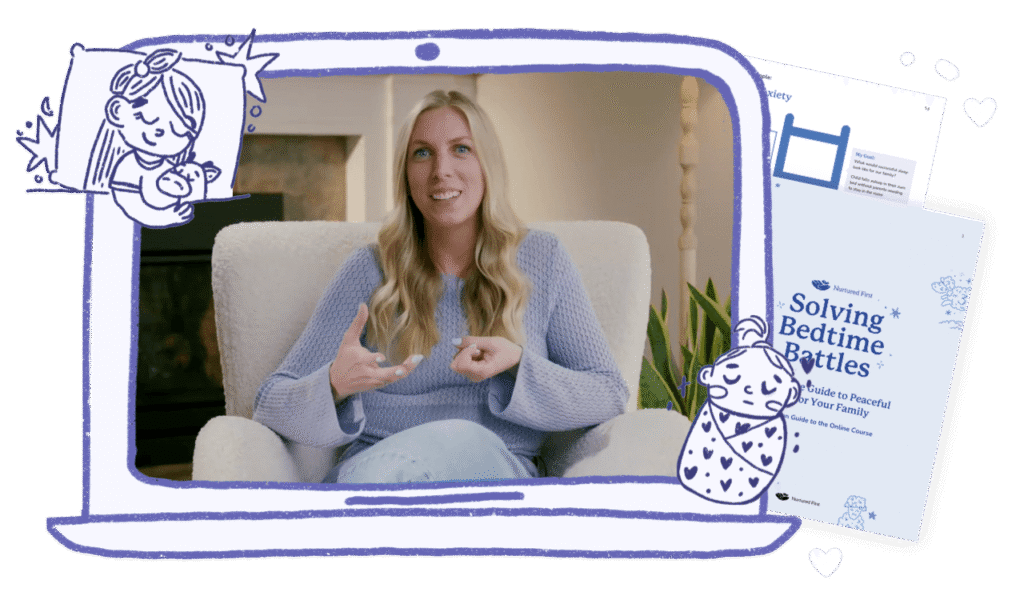
For when bedtime has become the longest, hardest part of the day. Video lessons that get to the bottom of why your child cannot settle, then make gentle changes that last, without leaving them to cry alone, for ages 2 to 8.
The School Toolkit
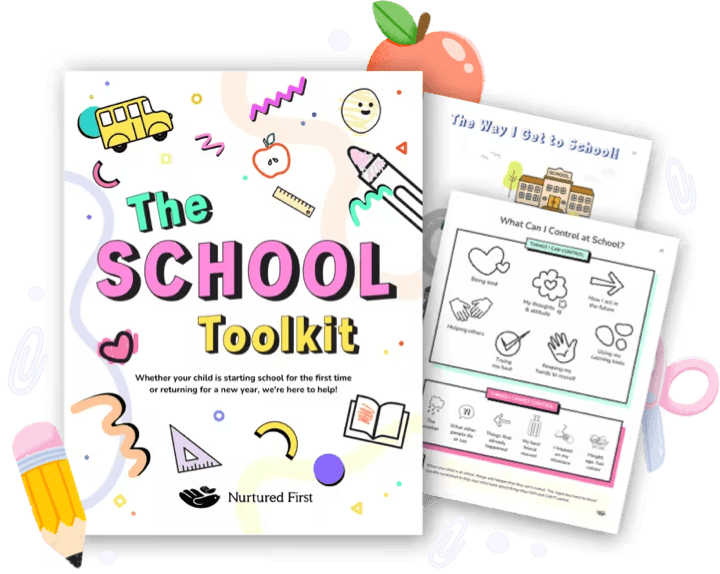
For when leaving you is the hardest part of school. Printable worksheets, activities, and a five-step plan you and your child work through together, so a calm drop-off comes from feeling ready and connected, not a rushed goodbye, for ages 3 to 9.
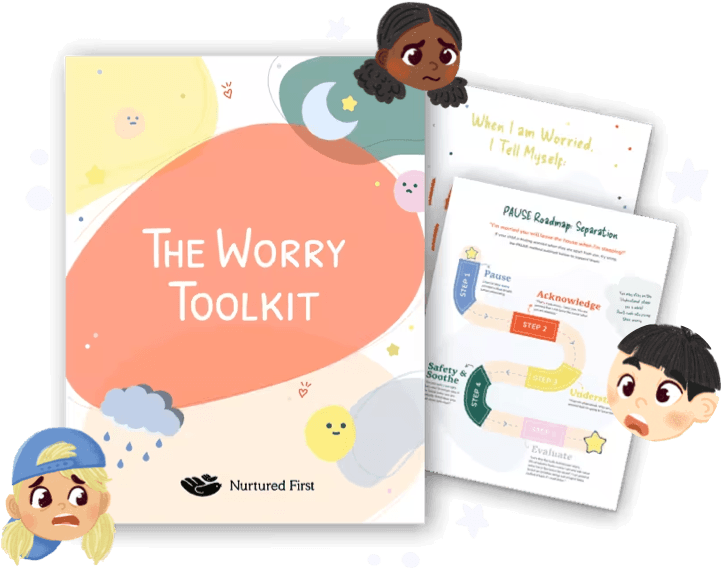
The Worry Toolkit
For the worries that show up at bedtime, before school, and out of nowhere. Printable stories, activities, and journal pages you and your child work through together, so a big worry becomes something they know how to handle, for ages 3 to 9.
