






Online parenting course
Parenting Little Kids
For parents of children ages 0 to 12, when the tantrums, the hitting, and the yelling you swore you would never do have taken over your days.
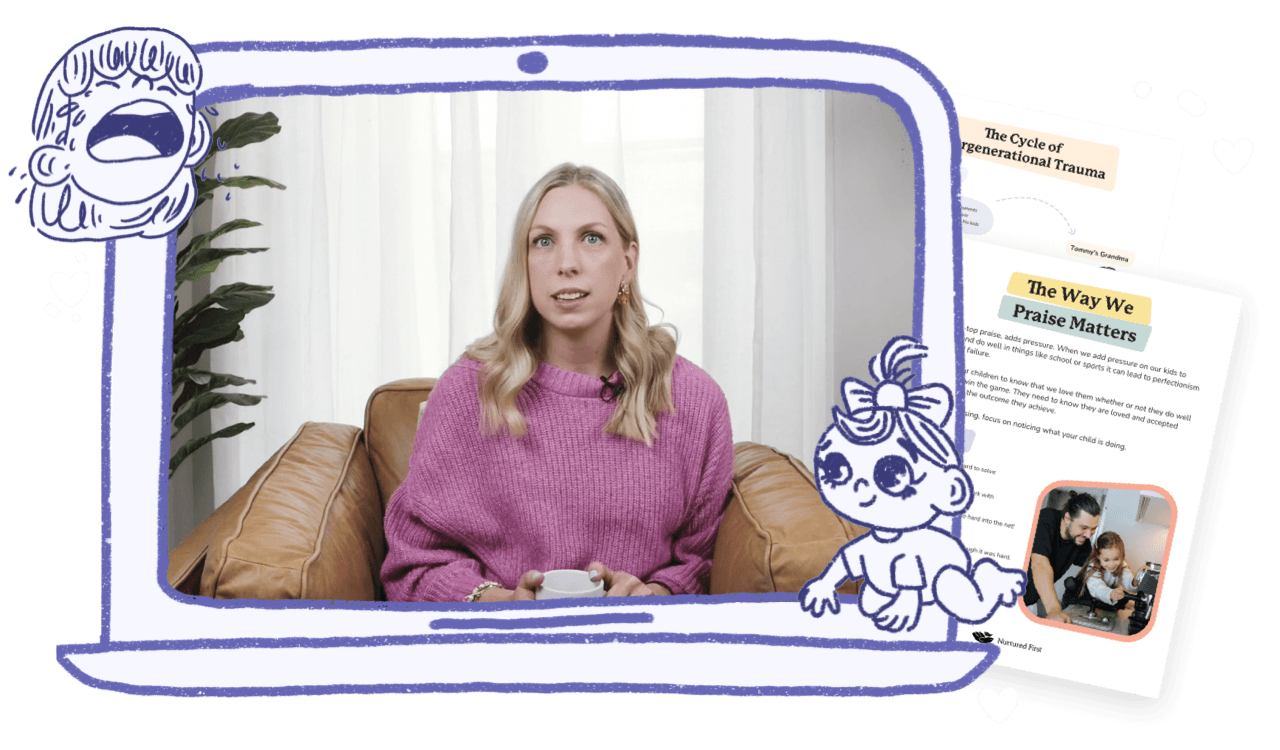
If any of these sound familiar, you're in the right place.

You keep losing the temper you swore you would keep.
You start the day promising to stay calm. Then the tantrum comes, your voice goes up, everyone ends up in tears, and you spend the rest of the day feeling guilty about the way you handled it.

The hitting started, and nothing you try makes it stop.
The hitting, the biting, the kicking. You have tried time-outs, taking a toy away, and staying calm, and it keeps happening. You are starting to dread the next playdate, and quietly wondering what you are doing wrong.

You have read the tips, and you still feel one step behind.
You have the books, the saved posts, the sticker chart on the fridge. Each idea works for a few days and then stops, and most days it feels like your little one is running the house instead of you.
Get started today
Parenting Little Kids
US$153.99
- More than 30 short video lessons, most between 2 and 28 minutes
- An introduction and 7 modules, building from discipline foundations to a bonus Q&A with Jess
- Printable handouts and scripts to use in the moment
- On any device, and yours to revisit whenever you need it
What you'll learn
Understand What's Really Going On
Why your child does what they do. Learn the brain science under tantrums, hitting, and whining, so the behavior stops feeling like defiance and starts to make sense.
The need under the behavior. Get curious about what a meltdown is actually telling you, instead of only trying to make it stop.
Why rewards and consequences backfire. Understand what the research actually says about punishments and bribes, and why the approaches you were handed tend to work for a week and then fade.
Stay Calm When It Counts
Keep your cool in the hard moment. Find out why your child's big feelings hook your own, and get tools to stay steady instead of snapping.
Repair after you lose it. Learn what to say and do once you have already yelled, so the moment becomes a way back to each other instead of a wound.
Parent differently than you were raised. If warm, calm parenting was never modeled for you, build your own family values and a steadier way to respond.
Know What to Do Next
Words for the daily battles. Get specific scripts for crying, whining, "I hate you," and the limits that keep getting tested.
Calm the tantrum without giving in. Use a simple plan for meltdowns that holds the limit and the connection at the same time.
Ease the sibling fights. Handle the hitting, the jealousy, the endless "that's not fair," and even adding a new baby to the mix.
See what's included
More than 30 short video lessons across an introduction and 7 modules, including 2 bonus modules, plus printable handouts. The lessons are short on purpose, so you can learn one idea while the kettle boils and use it that afternoon. Open any module to see every lesson.
Start here. Jess welcomes you to the course, shows you how to get the most out of it, and shares four tools that make a difference right away.
Welcome! Start Here!
Video
4 Tools That Make a Difference
Video
Full Scripts & Workbook
Course Reference List
You want to discipline in a way that actually changes behavior, but most of us were only ever taught to ignore, punish, or bribe. This module unpacks the research behind punishments and teaches a more effective approach.
What is Gentle Discipline?
Video
Old School Methods of Discipline
Video
Natural and Logical Consequences
Video
Core Family Values
Video
Discipline Worksheet
Consequences Worksheet
Core Value Worksheet
Your toddler is melting down all day and you cannot work out why. This module takes you inside your toddler’s brain, then hands you a simple plan for the crying, the whining, and the meltdowns.
Understanding Your Toddlers Brain and Behaviour
Video
Framework for Dysregulation
Video
Building a Secure Relationship With Children
Video
Meltdown Worksheet
Connected Relationship Worksheet
If you did not grow up with warm, responsive parenting, this can feel new and overwhelming. You get space to reflect on your past, set your own family values, and learn tools to stay calm.
Introduction to Reparenting
Video
Reparenting and Intergenerational Trauma
Video
Reflecting on the Past + Repair for the Future
Video
Triggers are like "Ice-Cream Truck Music"
Video
5 Practical Tools for Reparenting
Video
Triggers Worksheet
Keeping Calm Worksheet
Why won’t they stay at the table? Why the daily tears at drop-off? The answer depends on your child. This module walks through the most common reasons behind challenging behavior so you can get curious about yours.
Curiosity is the Key To Understanding Behaviour
Video
Responding to Crying and Whining
Video
Ultimate Guide to Curiosity Worksheet
This is where it becomes real, lasting change at home, from what to say when your child says they hate you, to how to repair after you have lost your cool.
Teach Kids When They Are Teachable
Video
Building a Calming Toolbox
Video
Encouraging Independent Play
Video
When Kids Say "I Hate You"
Video
When You Lose Your Cool: Repairing the Relationship
Video
Collaborating Worksheet
Repair Worksheet
Step-by-step help for the sibling stuff: sharing, rivalry, one child hitting another, adding a new baby, and the days when no one in the house is getting along.
Introduction to Supporting Siblings
Video
Adding a New Baby Into the Family
Video
When One Child Hits Another
Video
Stop Getting Tangled Up in the Facts
Video
Teaching Your Kids to Share
Video
Fostering a Sibling Bond
Video
Stop Forcing Apologies (And What To Do Instead)
Video
The Magical Art of Resetting With Siblings
Video
Most parenting challenges do not have a one-size-fits-all answer. Jess answers the questions she hears most from parents, so you can find a response that fits your family.
Q: What do I do when my toddler says "no" to everything?
Video
Q: What do I do when my child lies to me?
Video
Q: What can I do when I feel triggered?
Video
Q: What do I do when my child thinks their behaviour is funny?
Video
Q: What about when tantrums seem random?
Video
Q: What about behaviours that happen when my child is alone?
Video
Q: What if I do all of this and there is no change?
Video
Q: Do I have to do this perfect to be a good parent?
Video
Extra printable guides included with the course.
Guide to Playful Parenting
Power Struggles Guide
Healthy Boundary Reminders
Responding to Hitting, Kicking, and Biting
Reminder on Praising Your Littles
Navigating Tricky Topics

Jess VanderWier
Registered Psychotherapist and mom of three
Jess VanderWier is a Registered Psychotherapist and the founder of Nurtured First. For years she has helped parents move past yelling and the daily power struggles, toward an approach built on connection, brain development, and responsive discipline.
Her own parenting journey with her oldest is what started all of this, so she knows the exhaustion and the guilt from the inside, not just from across a therapy room. She teaches the way a good friend would, warm, honest, and full of real examples you will recognize from your own home.

Calmer days, and a child who feels understood.


I ended up getting a cheaper course, but kept coming back to the fact that we were getting so triggered and also needed to understand our daughter’s hitting more because it started happening to everyone, not just our baby at the time. It’s been about 4 months since we’ve taken your course, and honestly it’s changed our lives. I didn’t fully get how to “get curious” before your course and it helped us find out why she was actually hitting. When we actually knew how to get curious, we followed your advice and taught her the skills she needed to ask for a break and, like you say, proactively help her. She’s doing SO much better with the hitting, and nothing else was helping. Thank you, thank you, thank you!!!
Read moreRead less
Hey!! I just wanted to let you know how your course has changed our family. At first I didn’t see much of a change. Our two-year-old was still having meltdowns, so I thought I had failed. But then he would look at me and say he was sad and he was crying; basically, now that he can tell me what he’s feeling his meltdowns don’t come as often and don’t last as long!! Also me trying to remain calm in his chaos has helped tremendously!! I never knew these littles can’t regulate their feelings at this early stage, but totally makes sense!!!
Read moreRead less
Your course has brought back the patience that I lost as a result of the pandemic and my son starting virtual kindergarten. I appreciate all the information in the course (I’m not done yet). My son was having a hard time listening in school and I appreciate the script you shared “It’s hard to listen, what’s going on?” Thank you for giving me the peace and patience I needed!
Read moreRead less
What makes this course different

It treats behavior as a clue, not a crime.
Most parenting advice is built to make the behavior stop right now. This course starts one step earlier, by getting curious about what the behavior is trying to tell you, because that is what changes it for good.

You watch a therapist do it.
Instead of reading a tip and hoping you get it right, you see Jess handle the crying, the “I hate you,” and the meltdown in real time, including her tone and her timing. You learn what calm and connection actually sound like.

Gentle does not mean permissive.
Responsive parenting is not about letting everything slide. You will learn to hold a firm limit and stay close at the same time, with no cry-it-out, no shaming, and no ignoring required.

It works on you, too.
Most parenting courses are only about the child. This one gives you a whole module of your own, for the triggers and old patterns that make staying calm so hard, because the hardest part of a tantrum is often what it stirs up in you.

It grows from babies to pre-teens.
The framework holds whether you are soothing a preverbal baby or negotiating with an eight-year-old. You come back to it as your child changes, and it still fits.

Built for the parent running on empty.
You do not have to start at lesson one or finish the whole course to get help today. Jump straight to the meltdown, the hitting, or the sibling fight you are facing right now, and come back for the rest when you have the energy.
You can become the parent you hoped to be, one hard moment at a time.
This was never about a perfectly calm house, but about fewer blow-ups that spiral, quicker repair when they happen, and a child who knows you are on their side. Begin with the introduction this week, then turn to the module for whatever is hardest in your house right now.
Frequently asked questions
Parents and caregivers of children ages 0 to 12 who are tired of yelling and dealing with tantrums, hitting, whining, power struggles, or sibling fights, and who want an approach that works now and ten years from now.
Yes. You can use the strategies even while your child is preverbal, and you are building a strong foundation from the very start. The sooner you understand what is going on underneath, the more naturally it comes once the words and the bigger feelings arrive.
Many parents of neurodivergent and highly sensitive children have found it helpful. The approach is not one-size-fits-all. It teaches you to get curious about your own child’s needs, so you can use the tools in a way that fits the child in front of you.
Free tips and cheaper courses can genuinely help, and plenty of parents start there. The difference is that a tip tells you what to do, and this shows you how, with Jess walking you through the exact words to use when your child pushes back. You also get why it is happening in the first place, so you are not stuck reusing a script that worked once and then stopped. One mom told us she bought a cheaper course first, kept getting triggered, and only understood her daughter’s hitting after going deeper here. If the free version has already given you what you need, you may not need this. If you have tried the tips and still freeze when the meltdown starts, this is the part they leave out.
The course holds over 4 hours of video, broken into bite-size lessons between 2 and 28 minutes long. You can learn one idea in a spare few minutes and use it that day, and skip straight to the lesson you need most.
Yes. The course is completely self-paced. There are no scheduled sessions and no deadlines. Watch in order, or jump to the struggle taking over your house today, and revisit any lesson whenever you need it.
Yes. Comments are turned on for the course videos, so you can ask a question right under the lesson you are watching.
No. This is parenting education. It does not diagnose anything, and it does not replace therapy, medical care, or other professional support. If you are worried about your child’s safety, mental health, or development, please work with a qualified professional.
You have 30 days from purchase to request a course refund if it is not the right fit and you have completed 50 percent or less of the course content. See the refund policy for the full terms.
Related resources
Support your child's whole world
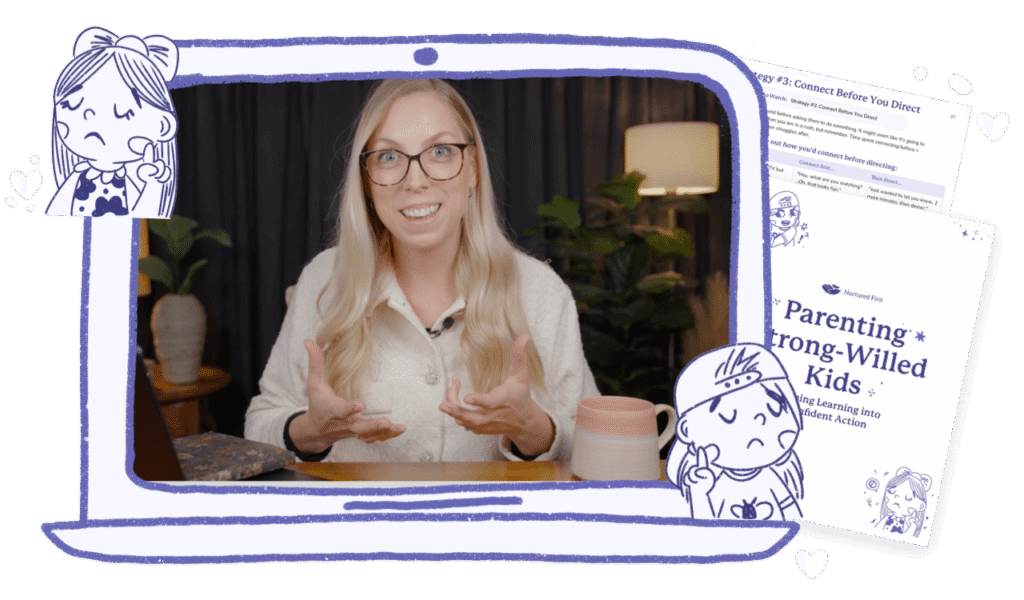
Parenting Strong-Willed Kids
For the child who turns getting dressed, dinner, and bedtime into a standoff. Video lessons and scripts that show you why your child digs in, so you can hold a limit without punishment or breaking their spirit, for ages 2 to 8.
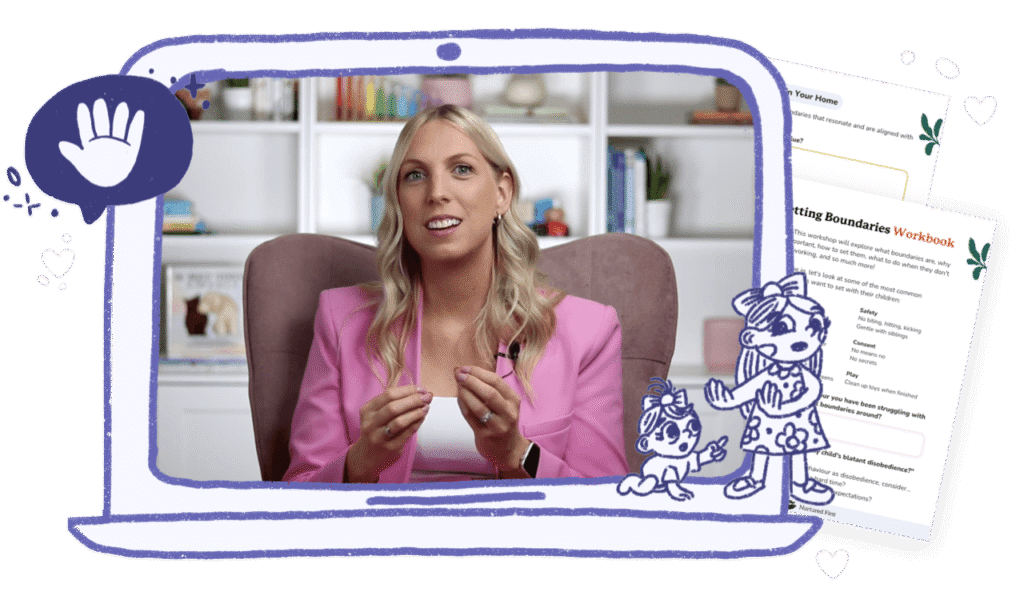
Setting Boundaries
For when you cannot tell whether you are being too soft or too strict. Video lessons on what a boundary really is, how to hold it without yelling, and what to say in the daily battles, for ages 1 to 12.
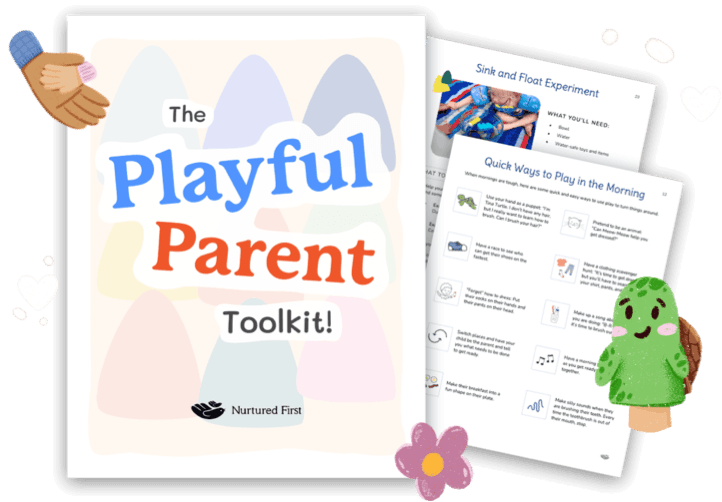
The Playful Parent Toolkit
For the days when everything has turned into a power struggle. Printable games, activities, and simple strategies you and your child do together, so cooperation comes from the fun you have instead of one more consequence, for ages 3 to 9.
