



Online parenting course
Body Safety and Consent
For parents of children ages 0 to 7, when you know the body-safety conversation matters but you freeze on what to actually say.
If any of these sound familiar, you're in the right place.
You know it matters, and you keep putting it off.
You have read that body safety is important, and you mean to start. But every time the moment comes, you are not sure which words to use, how much is too much, or how to say it without making it weird. So you let it pass again and promise yourself you will do it soon.

Something happened, and now it feels urgent.
A story in the news. A quiet disclosure from a friend. A question at bath time you did not see coming. Suddenly this jumped to the top of the list, and you want to get it right starting today, without scaring your child or yourself.

You are afraid of doing it wrong.
You worry you will say too much and take their innocence, or too little and leave a gap. You freeze when they shout a body-part word in the store, or when a relative insists on a hug your child clearly does not want. You want to meet these moments with calm instead of panic.
Get started today
Body Safety and Consent
US$44.74
- Every video lesson, from preparing yourself to answering your toughest questions
- Printable workbook with scripts and reflection questions
- Age-appropriate language for ages 0 to 7, including babies and toddlers
- On any device, and yours to revisit whenever you need it
What You'll Learn
Get Yourself Ready First
Face your own fears before the conversation. Work out where your hesitation comes from, so you can talk about bodies and safety without handing your child your own anxiety.
Set your family's values around privacy and consent. Decide what touch, privacy, and "no" mean in your home, so you are not improvising in the hard moment.
Become the person they tell. Learn why being your child's trusted expert is the single most protective thing you can do, and how to become it.
Teach the Core Skills in Plain Language
Use the real names, without the cringe. Get comfortable teaching anatomically correct names for body parts, so your child can describe their own body clearly if they ever need to.
Teach consent through everyday moments. Use simple, daily examples to show what consent is, so it becomes a habit long before it is ever a big idea.
Name safe, unsafe, and confusing touch. Give your child language for the "uh-oh" feeling, and a clear rule for the difference between an unsafe secret and a happy surprise.
Handle the Real-Life Moments
Answer the questions that catch you off guard. Get calm, age-appropriate scripts for "Where do babies come from?" and the everyday curiosity that comes with ages 0 to 7.
Hold the line when other adults don't. Know what to say when a relative ignores your child's "no", and how to keep your no-secrets rule with the adults in their life.
Respond to the moments that make parents freeze. Handle public outbursts, sibling curiosity, exposure to unsafe images, and a worrying disclosure, with a plan instead of panic.
See What's Included
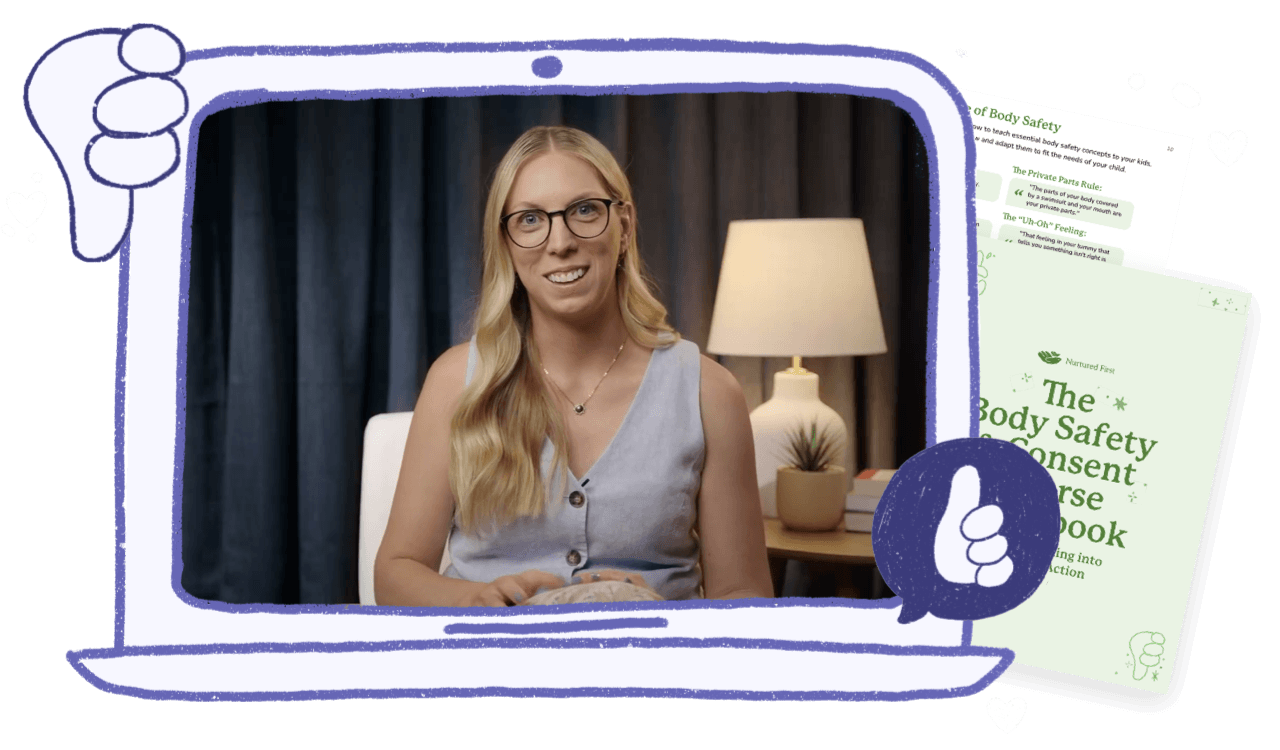
35 short video lessons across 4 modules, plus a printable workbook with scripts and reflection questions to help you turn the course concepts into a plan for your family. The lessons are short on purpose, so you can learn one idea while the kettle boils and use it that afternoon. Open any module to see every lesson.
4 lessons.
Before you say anything to your child, you get yourself ready. Reflect on your own history so you can come to these talks with intention, set your family’s values around privacy and consent, and step into the role that protects them most: the safe adult they come to first.
Your Mindset For Body Safety Talks
Video
Creating Your Family's Body Safety Values And Boundaries
Video
How To Be THE Safe Person For Your Child's Toughest Questions
Video
Understanding The Reality of Child Sexual Abuse
Video
6 lessons.
The heart of the course: clear scripts and age-appropriate words for the big ideas, from using correct anatomical names without flinching, to consent, unsafe secrets, and the difference between safe, unsafe, and confusing touch.
How To Teach Anatomically Correct Names For Body Parts
Video
Consent In Everyday Life
Video
Safe Touch vs. Unsafe Touch
Video
How To Help Your Child Identify A Trusted Person
Video
Secrets vs. Surprises: A Critical Body Safety Lesson
Video
Teaching About Private Parts And Private Places
Video
3 lessons.
What healthy curiosity actually looks like from ages 0 to 7, calm scripts for the “where do babies come from?” question, and a gentle, proactive way to introduce digital safety before screens become a battle.
What's Normal: Navigating Childhood Curiosity About Bodies
Video
How To Answer "Where Do Babies Come From?"
Video
Setting Digital Boundaries: A Body Safety Approach To Screen Time
Video
22 lessons.
Your playbook for the questions that make parents go quiet, from a child who uses body-part words as a joke, to sibling “doctor” games, to a worrying disclosure, including when to seek professional help and what to ask.
What To Do When You MUST Touch Your Child For Safety
Video
Teaching Your Child To Ask For Consent Before Touching Others
Video
What To Do When Another Adult Ignores Your Child's "No"
Video
What To Do When Your Child Yells "Penis!" At The Grocery Store
Video
How To Correct Body Part Nicknames Your Family Already Uses
Video
Answering Your Child's Questions About Different Body Parts
Video
When Your Child Touches Their Private Parts In Public
Video
What To Do When Your Child Sees Someone's Private Parts
Video
A Simple, Factual Guide To Explaining Erections
Video
What To Do When Your Child Touches Their Sibling's Private Parts
Video
Is It OK To Be Naked Around Your Child?
Video
When To Start Giving Your Child Privacy For Bathing And Changing
Video
When Should Siblings Stop Bathing Together?
Video
When Play Becomes A Concern: A Guide To "Doctor" Games
Video
How To Uphold Your "No Secrets" Rule With Other Adults
Video
Explaining Why Some Information Is Private, Not Secret
Video
What To Do If Your Child Keeps Secrets From You
Video
What To Do If You Suspect Your Child Has Seen Pornography
Video
Will Talking About Pornography Or Sex Make Them More Curious?
Video
What To Do When Your Child Sees Something Unsafe At A Friend's House
Video
A Simple, Factual Guide For Explaining Menstrual Products
Video
Handling Sensitive Questions In Front Of Other Children
Video

Jess VanderWier
Registered Psychotherapist and mom of three
Jess VanderWier is a Registered Psychotherapist and the founder of Nurtured First. As a child therapist, she has sat with families through some of their hardest moments, so she knows how much these conversations matter and how easily fear gets in the way of having them.
Her approach to body safety starts with you. She helps you get to the root of your own worry first, so you can be the calm, steady guide your child needs, then shows you how to have tiny, age-appropriate conversations that build trust over time instead of overwhelming your child. She is also a mom of three, so she knows the real version, the one that happens mid-bath when a toddler asks something you did not see coming.
What makes this course different
Safety is built, not blurted.
Most body-safety advice is one big, scary talk or a single picture book. This course teaches the opposite: small, calm conversations woven into ordinary days, because that is what actually keeps a child safe and willing to come to you.

You watch a therapist do it.
Instead of reading what to say and hoping your tone lands, you see Jess use the exact words, in the matter-of-fact voice that keeps these talks from feeling scary. You learn what calm and clear actually sound like.

It starts with you, not your child.
Most body-safety resources go straight to the child. This one gives you a module of your own first, because the real obstacle is usually a parent’s own discomfort, not the child’s readiness.
A library for the freeze moments.
Twenty-two short videos answer the questions parents are too unsure to ask out loud, from “doctor” games to a child who saw something at a friend’s house. Jump straight to the one you are facing and get a clear answer in minutes.

Built for ages 0 to 7, and the years after.
The same calm framework works whether you are naming body parts with a toddler or fielding a sharper question from a six-year-old. You come back to it as your child grows and the questions change.

Protective, never frightening.
No stranger-danger scare tactics, no shame, no silence. Your child learns they are the boss of their own body and that you are the safe person to tell, which is the foundation real safety is built on.
The Confident Parent Guarantee
Take 30 days to try the course. If it is not the right fit for your family and you have completed 50 percent or less of the course content, email support@nurturedfirst.com within 30 days of purchase to request a refund. See the refund policy for the full terms, including account standing and offer-specific conditions. We can offer that because parents who start having these conversations rarely want to go back to silence.
This was never about one perfect talk. It is about a home where bodies are not a taboo, where “no” is respected, and where your child knows that whatever happens, you are the person they can tell.
US$44.74
Frequently Asked Questions
Parents and caregivers of children ages 0 to 7 who want to teach body safety, consent, and correct names in a way that protects without frightening. It is for the parent who knows the conversation matters and wants the words to do it well.
Yes, and starting now makes it easier, not harder. At this age it is not about complex scenarios. It is small, in-the-moment learning: using correct names at bath time, respecting a turned-away face instead of pushing a kiss, gently naming privacy during play. Doing it this way makes body safety a normal part of family life and means you never need one big, scary talk later.
This is the fear we hear most, and the opposite is true. When we do not lead these conversations, children fill the gap from less reliable places: other kids, a screen, a guess. Age-appropriate, shame-free language satisfies their curiosity and wraps safety and trust around them. It protects their innocence rather than taking it.
No. The whole method is built to avoid fear-based language. Instead of warnings, your child learns positive, concrete ideas they can actually hold onto, like being the boss of their own body and trusting their “uh-oh” feeling. It is a life skill taught calmly, the same way you teach holding a hand to cross the street.
Free resources can genuinely help, and plenty of parents start there. The difference is that a book or a printable tells your child the concept, while this shows you how to teach it: the exact words, the calm tone, and what to say when your child pushes back or asks the question you were dreading. You also get the harder moments covered, the ones a printable leaves out, like a relative who ignores a “no” or a child who has seen something unsafe. If a book has already given you what you need, you may not need this. If you have the books and still freeze when the real moment comes, this is the part they leave out.
This course is for you, the parent. It is video lessons that take you deep into every body-safety and consent topic and give you the language to lead. The Body Safety Toolkit is a printable set you use with your child, ages 3 to 9: stories, posters, coloring pages, and activities that turn the ideas into something you do together. Many families use both, the course to prepare you and the toolkit to practice with your child.
It is never too late, and there is a lesson on exactly this. A short, no-shame line is usually all it takes: “You know how we used to say ‘tutu’? You are big enough now to know the real word, which is ‘vulva’.” Children follow your lead faster than you expect.
This is one of the most common challenges, and the course gives you both the values to stand on and the exact words to use. You will learn to say something like, “In our family, we are teaching the kids that they are in charge of their own bodies,” in a way that feels calm and clear rather than confrontational.
Yes. Comments are turned on for the course videos, so you can ask a question right under the lesson you are watching.
This course is parenting education, and a big part of it is helping you respond well if your child discloses something. It does not replace professional support, a medical exam, or a report to the right authorities. If you are worried your child has been harmed, or something does not feel right, please contact a qualified professional or your local child-protection service. The course will help you stay calm and know the early steps, not stand in for expert help.
You have 30 days from purchase to request a course refund if it is not the right fit and you have completed 50 percent or less of the course content. See the refund policy for the full terms, including account standing and offer-specific conditions.
Related resources
Support Your Child's Whole World
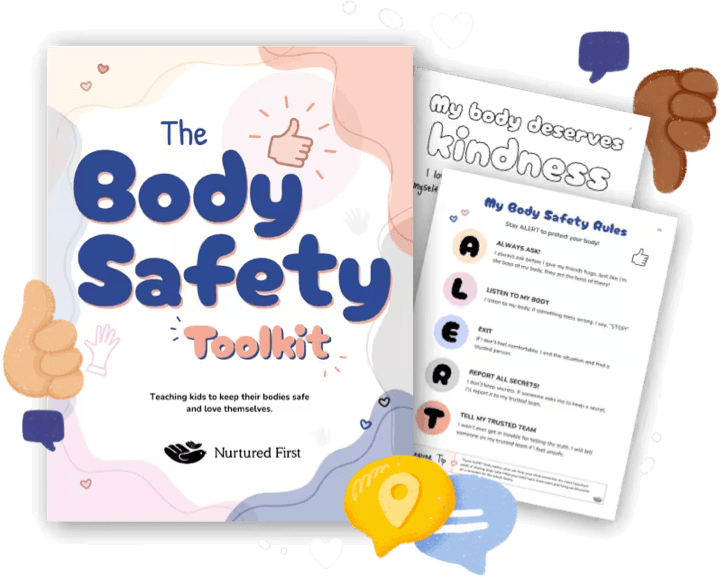
The Body Safety Toolkit
For body safety you want to teach calmly, not in one big scary talk. Printable stories, games, scripts, and posters you and your child work through together, so bodies, privacy, consent, and safe and unsafe touch become normal conversations, for ages 3 to 9.
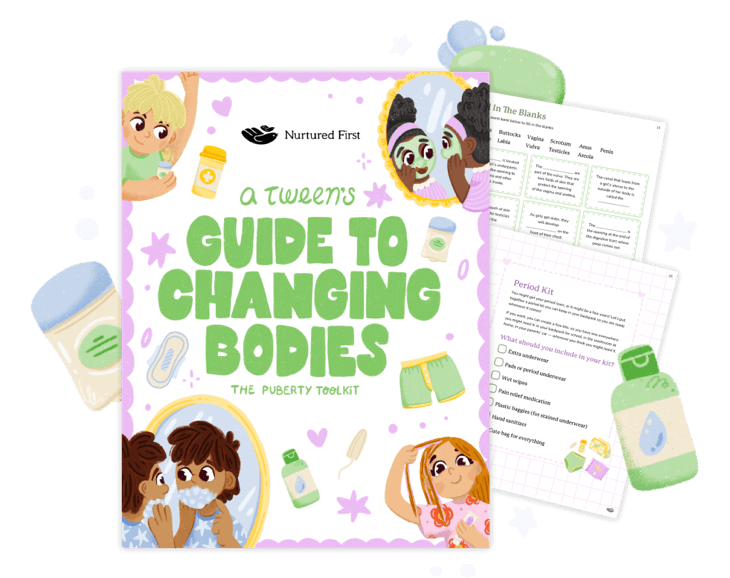
The Puberty Toolkit
For the growing-up talks you keep meaning to start. Printable activities, journal pages, and worksheets you and your tween do together, covering body changes, periods, online safety, and big feelings without shame, so they come to you first, for ages 8 and up.
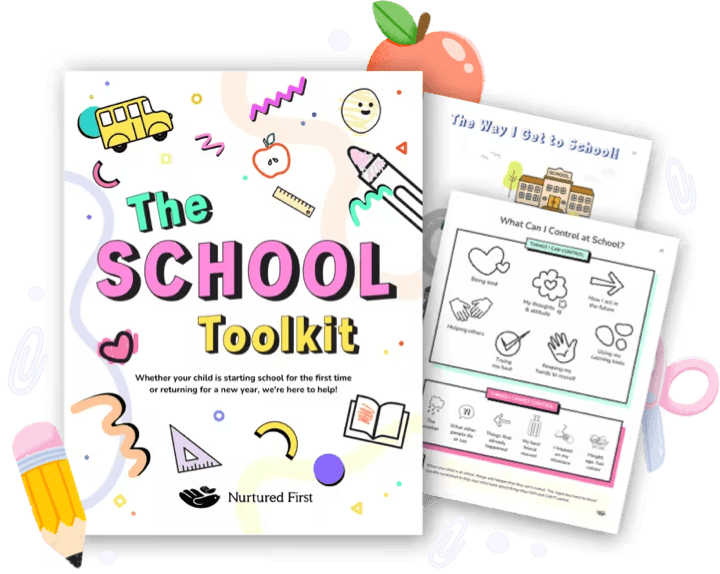
The School Toolkit
For when leaving you is the hardest part of school. Printable worksheets, activities, and a five-step plan you and your child work through together, so a calm drop-off comes from feeling ready and connected, not a rushed goodbye, for ages 3 to 9.
