




Printable toolkit
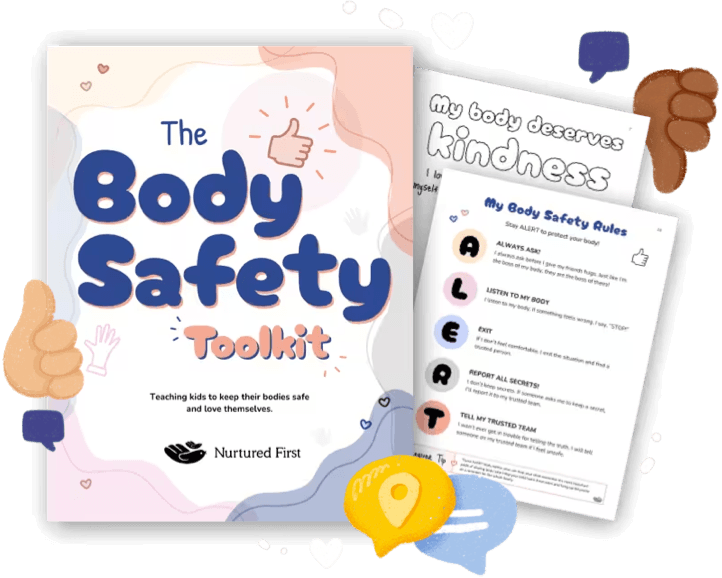
The Body Safety Toolkit
Teach your child about bodies, privacy, consent, and safe and unsafe touch, calmly and without fear. It’s a printable set of stories, games, scripts, posters, and activities you and your child work through together, one page at a time, so body safety becomes a normal conversation instead of one big scary talk.
When you want clear words
This is for the conversations you want to handle calmly.

School, daycare, and sleepovers are coming, and you want your child ready first.

Your child is curious about bodies, and you want to answer without making it weird.

You know this conversation matters, but you do not want to scare them.
What you get
What comes in the printable toolkit
US$23.64
- 34 printable pages of worksheets, posters, and activities
- Stories and games that make body safety easy, and even fun, to talk about
- Scripts for your child to help them learn to say no when something feels uncomfortable, ask for space, and get help in tricky situations
- Wall posters for body safety, consent, and body confidence
- A make-your-own safety plan and a safe-adults activity
- Parent tips from Jess and the expert team
Buy once and print it as often as you like for your own household. Pull out the page you need, sit down together, and follow your child’s questions from there.
What Your Child Will Learn
Their body, their words, their privacy
The correct names for body parts, and the difference between private and public parts
Privacy at home, at school, and at the doctor's office
Mantras for body confidence, and the idea that their body belongs to them and deserves kindness
Consent and boundaries
How to ask before touching, and how to say no to a hug or touch they do not want
That no means no, both for them and for their friends
Words for personal space, and how to treat a friend's body with respect
Safe touch, safe adults, and a plan
The difference between safe and unsafe touch, and the no-secrets rule
How to name their safe adults and make a simple safety plan
What to do when something feels wrong: say no, move away, and keep telling a safe adult until someone helps

Created by Jess and a team who understand body safety.
The Body Safety Toolkit was created by Jess VanderWier, a Registered Psychotherapist and mom of three, with a team of experts in body safety, child development, trauma, and children’s mental health. The goal is to help you teach protective body-safety skills in words a young child can actually understand, with stories, visuals, and calm practice you can come back to. This is a practical tool for starting and repeating these conversations. It is not a guarantee of safety or a replacement for therapy, medical care, or professional support.
What's inside
A Look Inside the Toolkit
A small preview of the real pages, so you can see how clear and child-friendly they are before you buy.
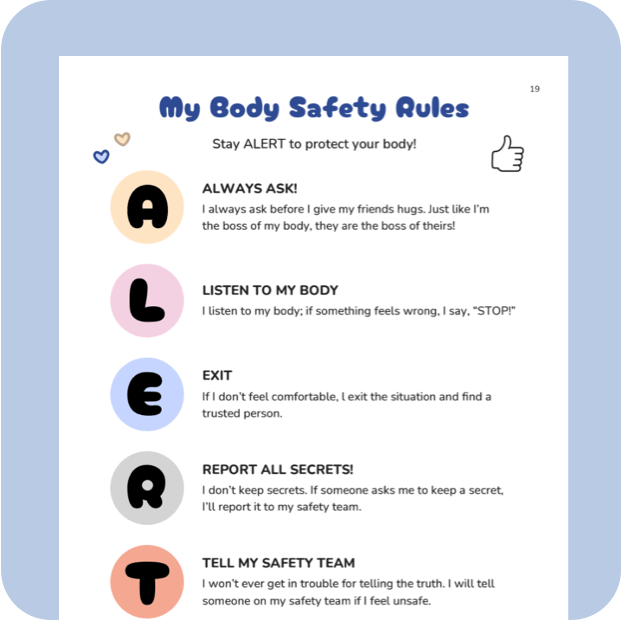
Poster
My Body Safety Rules
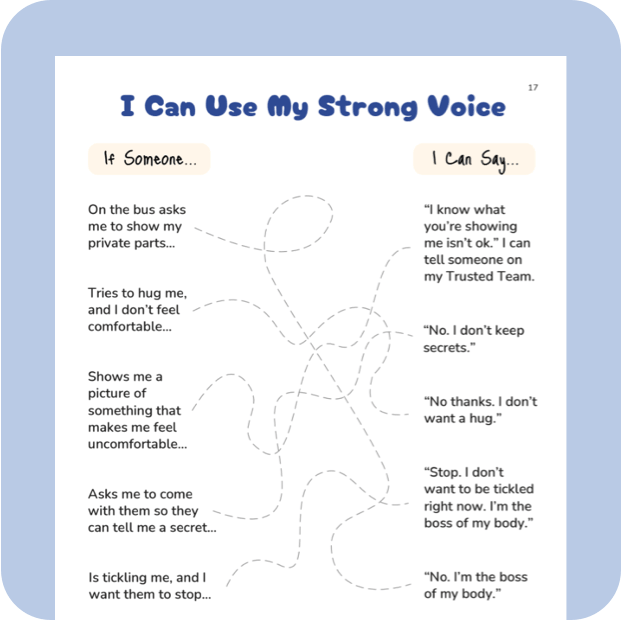
Worksheet
I Can Use My Strong Voice
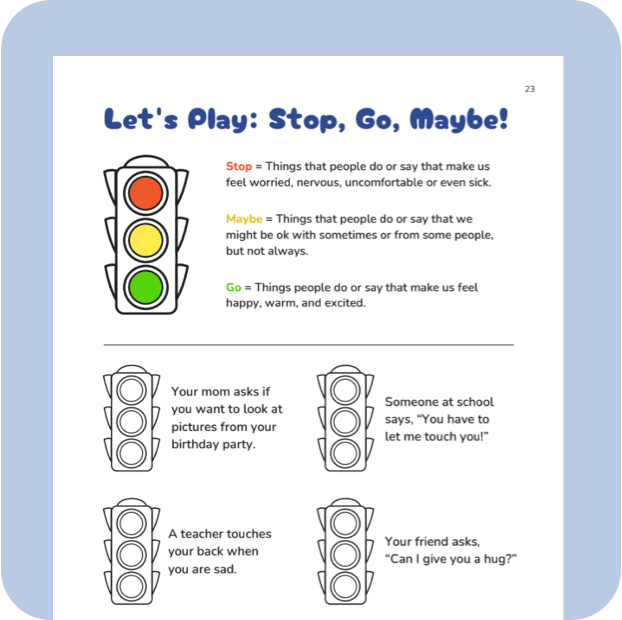
Activity
Stop, Go, Maybe
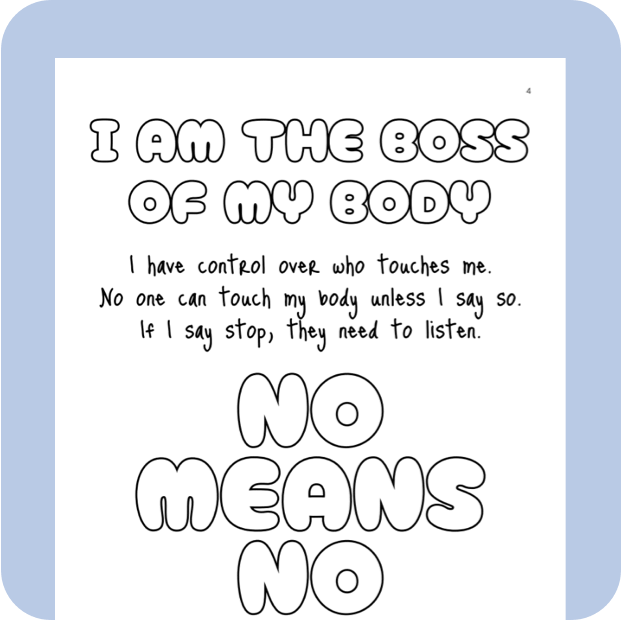
Script
I am the boss of my body

Jess, our son was super friendly and we didn’t want to dampen that, but we also wanted him to understand he couldn’t just go up to strangers. The body toolkit helped us teach him about asking for touch without making it scary or bad!
Read moreRead less
If this is the conversation you keep meaning to start, the pages are ready.
Picture the version where body safety is just a normal part of growing up in your house, not a talk you keep putting off. Your child knows the words, knows their body belongs to them, and knows who to go to if something ever feels wrong. You can start with a single page tonight, hang one poster, and let the rest wait until your child is ready for it.
US$23.64
Frequently Asked Questions

We made it for children ages 3 to 9. You know your child best, so you do not have to cover everything at once. Start with the pages that match what is going on right now, like a first sleepover or a lot of curiosity about bodies, and come back to the rest as your child is ready.
It is meant to be done with your child, not handed over. Print a page, sit down together, read the story or talk through the poster, and let the questions come. A few minutes at a time works better than one long sitting.
It is built so it does not. The toolkit uses calm, age-appropriate words, stories, and activities that teach your child what to do without dwelling on worst-case fears. The goal is a child who feels confident and prepared, not frightened.
Most likely, because this does not rest on one talk going perfectly. You get small pieces you can return to: a poster on the wall, a quick worksheet, a script ready for the next real moment. The repetition is what makes it stick.
That is okay. The toolkit is more than coloring pages. It uses stories, games, scripts, posters, and activities, so you can pick what fits your child and skip what does not.
The course is a video course for parents that goes deep on body safety and consent for you, the grown-up. This toolkit is a printable PDF you do with your child, ages 3 to 9, full of worksheets, posters, scripts, and activities that start the conversation in a way that feels easy. You can use the course to feel ready yourself and the toolkit to teach your child.
Most free printables are a single page on one idea. This is 34 pages covering the whole picture, from correct body-part names and consent to safe adults and a safety plan, in one place, with parent guidance and a do-it-together structure, created by a psychotherapist and a team of child-development, trauma, and mental-health experts. You are paying for the sequence and the guidance, not just the pages.
Yes. We made it with neurodivergent children in mind. The visuals, stories, games, coloring sheets, and activities give children more than one way to understand and revisit each idea.
The toolkit is licensed to the registered user and their household for personal, non-commercial use. Files must not be shared, distributed, or copied for other households or classrooms.
It is designed to be printed. Print the pages you want as many times as your household needs. You can read some pages on a screen, but the posters, worksheets, and activities work best on paper, where your child can point to them, color them, and come back to them.
It is one combined PDF you download and print at home. The pages are sized for US Letter and scale nicely to A4 if you need it. It is designed in color, but everything holds up in black and white too. You can also use it on a screen, though the posters, worksheets, and activities work best on paper.
Your purchase is handled through the Nurtured First checkout, and your printable download is available right after, with your order and receipt saved in your account.
No. It is educational support for body-safety conversations between you and your child. It does not replace therapy, medical care, legal advice, a school’s policy, or guidance from a qualified professional.
Because this is a digital printable toolkit, sales are final and cannot be returned or refunded. If you bought the wrong toolkit, contact us within 24 hours of purchase and before downloading. If you have trouble accessing the file, contact support@nurturedfirst.com and we will help. Read the full refund policy on the Refund Policy page.
Related support
If you need a different kind of body-safety help
A few more Nurtured First resources for the seasons around body safety.
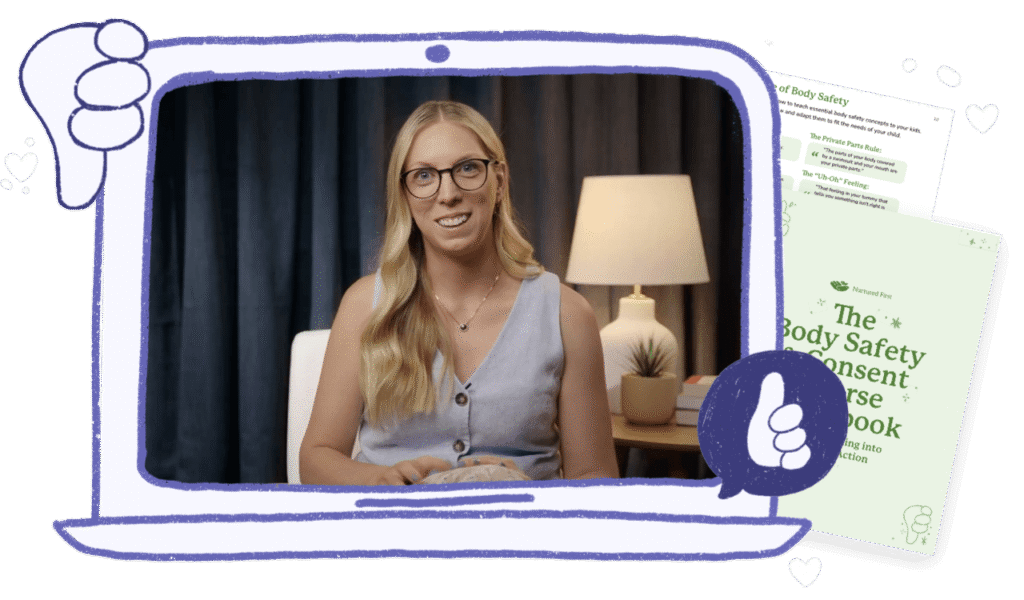
Body Safety and Consent
For when you know the body-safety conversation matters but freeze on what to say. Video lessons that give you the scripts and everyday moments to teach consent, correct names, and safe touch without fear, for ages 0 to 7.
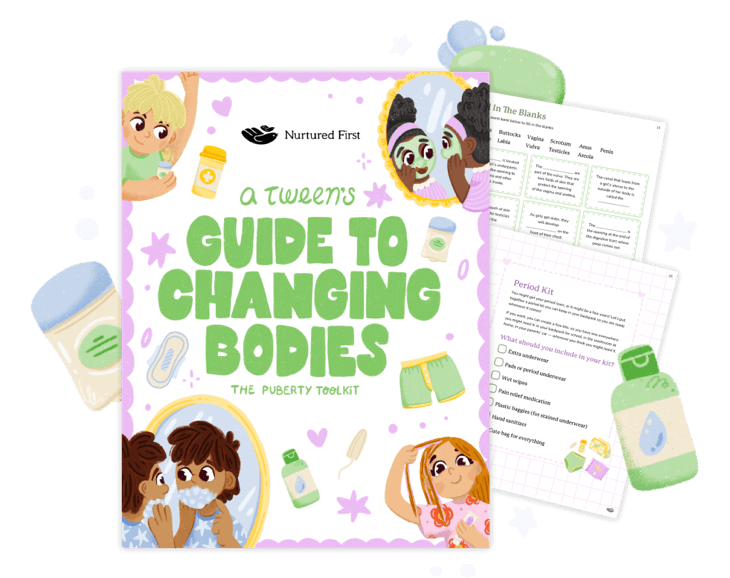
The Puberty Toolkit
For the growing-up talks you keep meaning to start. Printable activities, journal pages, and worksheets you and your tween do together, covering body changes, periods, online safety, and big feelings without shame, so they come to you first, for ages 8 and up.
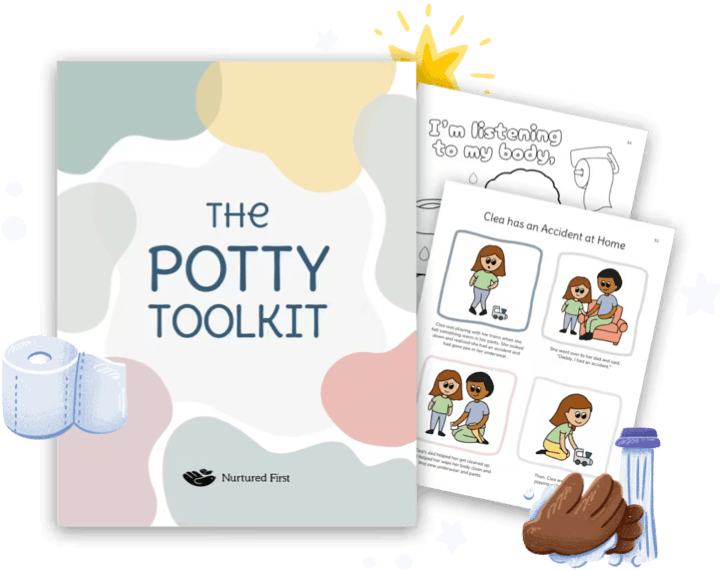
The Potty Toolkit
For potty training you would rather not turn into a power struggle. Printable stories, games, scripts, and posters you and your child go through together, so it follows their readiness instead of a sticker chart and a deadline, for ages 18 months and up.
